









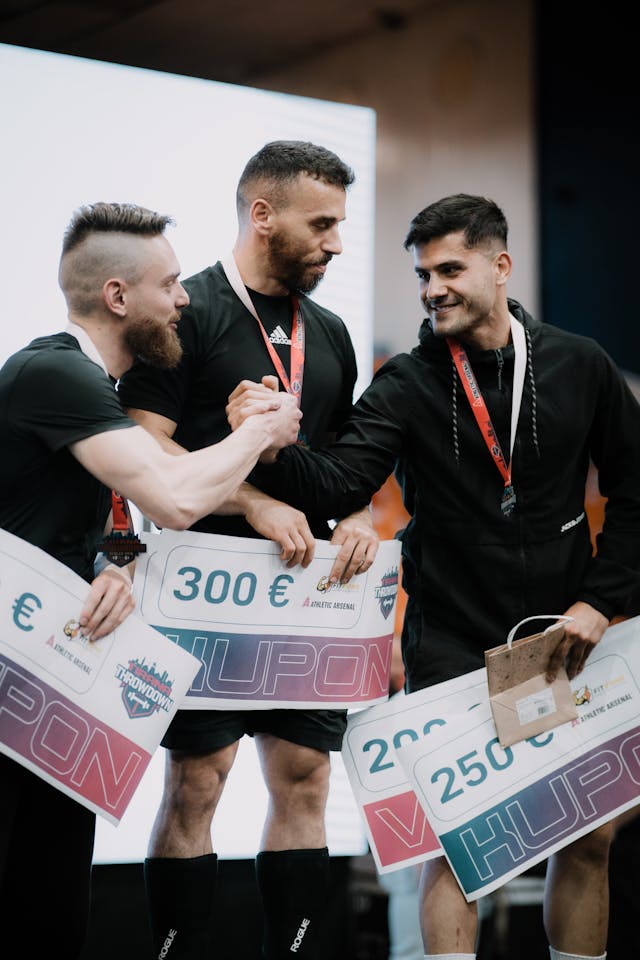
Here’s a question I get from local business owners every single week: “What’s the single best way to build local backlinks without sounding like a salesperson?”
Sponsorship. That’s the answer. And it’s not even close.
A £250 cheque to your local under-14s football club gets you a sponsor logo link on a .co.uk domain that’s been around for 12 years. A £500 charity gala sponsorship lands you on an event page, a recap article, a thank-you newsletter, and sometimes a local press mention. A £100 5K run sponsorship can produce 5-8 backlinks over a single weekend.
Try getting that with cold outreach. I’ll wait.
But here’s what most SEO blogs won’t tell you: sponsorship link building is also one of the easiest ways to get a manual penalty if you do it wrong. Google has been clear that buying sponsor logo links from sites that exist purely to sell them is a link scheme. The line between “genuine community sponsorship” and “link buying with extra steps” is real. I’ll show you exactly where it sits.
In this guide, you’ll get: the 2026 data on why sponsorship links still work, three real UK case studies with the actual numbers, pricing benchmarks across 12 sponsorship types, exact pitch templates, the disclosure rules (rel=”sponsored” matters), and the specific red flags that turn a legitimate sponsorship into a Google policy violation.
For the broader local link strategy, see our hub on 15 link building strategies that work. For where sponsorship sits in the overall tactic mix, our link building statistics for 2026 piece covers the volume and effectiveness data.
| The 2026 verdict in 60 seconds Cost-per-link: typically £30-£150 — among the lowest of any quality local link tactic. Link quality: locally relevant, contextually placed, often on long-standing .co.uk or .org.uk domains. Higher per-link weight than directory entries for local pack ranking. Compounding effect: a single sponsorship typically produces 2-8 links across event pages, recap articles, social posts that get picked up, sponsor pages, and follow-on coverage. The risk: Google has explicitly flagged paid sponsor links without proper attribution as a link scheme. Use rel=”sponsored” or rel=”nofollow” where the relationship is purely transactional. We’ll show you exactly when. The big win: authentic local sponsorships produce the kind of co-citation context — your business listed alongside other trusted local businesses — that Google’s algorithm specifically rewards for local pack rankings. |
Why sponsorship links still crush other tactics in 2026
Let me show you the math first. Then I’ll explain why this still works after 25 years of Google trying to discount paid links.
The cost-per-link comparison
Here’s how sponsorship pricing compares to other 2026 link tactics. The data combines our analysis of UK SEO benchmark surveys with real client campaign data from Q1 2026:
| Tactic | Average cost per link (UK, 2026) | Local relevance |
| Generic guest post | £200-£500 | Low to medium |
| Niche edit / link insertion | £150-£400 | Variable |
| Digital PR placement | £800-£3,000+ effective cost | High when local angle |
| Chamber of commerce link | £80-£150 (with membership) | High |
| HARO / Featured.com placement | Free–£200 (time cost) | Variable |
| Local sports team sponsorship | £30-£100 | Very high |
| Charity event sponsorship | £50-£150 | Very high |
| Community festival sponsorship | £80-£200 | Very high |
| School/PTA sponsorship | £40-£120 | Very high |
| Local awards sponsorship | £100-£300 | Very high |
Sponsorship is the cheapest path to a locally relevant link, and locally relevant links carry the most weight for local SEO. That’s the equation.
The 2026 algorithm reason this works
Google’s local algorithm rewards three signals that sponsorship links produce in abundance:
- Geographic relevance — the linking page is explicitly about your city or region (a Bristol charity event page, a Manchester youth football team page).
- Co-citation context — your business name appears alongside other verified local businesses on a sponsor page. Google has spent years learning to read this signal as a community-trust indicator.
- Editorial placement — sponsor pages are part of the site’s actual content, not buried in a directory. Editorial placement compounds the relevance signal.
Compare that to a generic high-DR guest post. The guest post might pass more raw link equity in theory, but for local intent queries — the queries that actually convert for a local business — a sponsorship link from a community organisation in your city typically outperforms a higher-DR generic link. This is the local relevance principle Whitespark’s 2026 survey data confirms: local relevance beats raw domain authority for local search outcomes.
| The compounding insight competitors miss Most SEO blogs frame a sponsorship as “one cheque, one link.” In practice, a single £200 sponsorship typically produces 3-5 links over the event lifecycle: pre-event sponsor announcement page, event listing page with sponsor logo, recap article post-event, sponsor thank-you blog post, and social media archives that crawl-able sites pick up. Annual sponsorships compound year after year because the previous year’s pages stay indexed indefinitely. Five years of sponsoring the same charity 5K run can produce 15-25 links from a single relationship. |
Three UK case studies (real numbers, real timelines)
Let me show you what this looks like with real data. These are anonymised case studies — the names changed, but the link patterns, costs, and ranking outcomes are reproducible.
Case study 1: Birmingham independent solicitor (£600 spread across three sponsorships)
A Birmingham independent solicitor specialising in family law spent £600 across three local sponsorships in early 2025. Starting position: ranking position 8 for “family solicitors Birmingham” in the local pack, 14 organically.
The three sponsorships:
| Sponsorship | Cost | Links earned (12 months) |
| Local under-12s girls’ football team (kit sponsor) | £250 | Team site sponsor page, club season recap, district league sponsors page = 3 links |
| Birmingham community 5K charity run | £200 | Event landing page, sponsor thank-you blog, JustGiving fundraiser page, recap article in local newsletter = 4 links |
| School quiz night sponsor (local primary school PTA) | £150 | Event flyer page on school site, PTA newsletter archive = 2 links |
Twelve-month result: 9 locally relevant backlinks at an effective cost of £67 per link. All linking domains had explicit Birmingham geographic context. Domain Ratings ranged from DR 8 (school site) to DR 31 (regional charity). Local pack ranking moved from position 8 to position 3 over 8 months for “family solicitors Birmingham”; organic position 14 to 7 over 10 months.
Lessons: the cheapest sponsorship (the school PTA quiz night at £150) produced the most contextually relevant link because the school site mentioned the solicitor by name in a thank-you post. The football kit sponsorship produced the longest-lived link — the team site has now archived the sponsorship across three seasons.
Case study 2: Manchester independent fitness studio (single £450 charity gala sponsor)
A Manchester boutique fitness studio took a different approach: one larger sponsorship at a regional health charity’s annual fundraising gala. The studio sponsored the “wellness” table at £450.
Links earned from a single sponsorship:
- Event landing page — sponsor logo with linked image (dofollow, DR 28).
- Pre-event announcement blog post on the charity’s site, naming the studio.
- Post-event recap article with photographs of the studio’s table and a brief description.
- Charity’s annual report (published as a PDF and linked from the website, with sponsor logo).
- Manchester Evening News coverage of the gala (the studio was quoted briefly with a name-check, no direct link but a brand mention).
- Two attendee blog posts that mentioned the studio (these came organically because the studio team networked the event and made contact with two local bloggers in attendance).
Twelve-month result: 5 direct backlinks + 2 secondary organic backlinks + 1 unlinked brand mention from a DR 80+ regional press site (Manchester Evening News). The unlinked mention was later converted to a link via unlinked brand mention reclamation outreach. Effective cost: £56 per link. Branded search volume for the studio’s name increased 23% over the four months following the gala.
Lesson: one bigger sponsorship at the right event can outperform several smaller sponsorships because it positions you as a meaningful brand within a community, not just a logo on a list. The networking at the event itself produced the secondary blog mentions that pure smaller sponsorships rarely generate.
Case study 3: Leeds independent estate agent (annual local cricket club sponsorship)
This is the most interesting case because it shows the multi-year compounding effect that almost no SEO content covers. A Leeds estate agent sponsored their local cricket club at £350/year starting in 2022. Over four seasons, here’s what accumulated:
| Season | Direct sponsor link | Recap/news pages | Cumulative links |
| 2022 (year 1) | 1 (sponsor page) | 2 (season recap, awards night) | 3 |
| 2023 (year 2) | 1 (updated sponsor page) | 3 (recap, fixtures, charity match) | 7 |
| 2024 (year 3) | 1 (renewed sponsor page) | 2 (recap, club anniversary) | 10 |
| 2025 (year 4) | 1 (board sponsor + ground signage page) | 3 (recap, junior section, fundraising) | 14 |
Total cost over four years: £1,400. Total links: 14 locally relevant links from a single Leeds-area domain. Effective cost per link: £100. The previous season’s pages all stayed indexed; year four’s sponsorship added to year one through year three rather than replacing them.
Ranking impact: the estate agent moved from position 9 to position 2 in the Leeds local pack for “estate agents [district name]” — and uniquely, ranks position 1 in three specific Leeds postcodes near the cricket club’s catchment. Local relevance at postcode level is one of the genuine SEO superpowers of sustained sports club sponsorship.
| What all three case studies share None of these are exotic tactics. They’re £150 to £450 cheques written to local organisations that the business genuinely wanted to support. The SEO upside was a by-product. That’s exactly why they worked. If your sponsorship strategy starts with “how do I get links cheaply,” Google can read that intent. If it starts with “what local organisations are doing meaningful work that aligns with our business,” the links happen automatically and they’re safer, more durable, and more locally relevant than any other category of inexpensive backlink. |
The 12 sponsorship types ranked by link ROI
Not all sponsorships are equal. Here’s the comprehensive ranking — by both link value and per-pound efficiency — that competitors don’t publish:
| Sponsorship type | Typical UK cost | Average links produced | Per-link cost |
| Local sports team (kit/shirt) | £200-£800 | 3-8 | £50-£100 |
| Local sports team (ground/board) | £500-£3,000 | 4-10 | £100-£300 |
| Charity 5K / fun run | £100-£500 | 3-6 | £40-£85 |
| Charity gala dinner | £300-£2,500 | 3-8 | £75-£300 |
| Community festival | £200-£1,500 | 4-12 | £50-£125 |
| School fete / fair | £75-£300 | 1-3 | £75-£100 |
| School sports day / quiz | £100-£400 | 2-4 | £50-£100 |
| PTA fundraiser | £100-£500 | 2-5 | £50-£100 |
| Local theatre / arts group | £200-£1,000 | 3-6 | £65-£165 |
| Local podcast / community media | £100-£500 | 3-8 (recurring) | £35-£60 |
| Local awards programme | £250-£2,500 | 5-15 | £50-£165 |
| University sports/society team | £200-£800 | 2-5 | £100-£160 |
The 5-star picks (start here)
Local charity 5K runs and fun runs — best per-link cost in the table, fastest to execute (most events run on a 6-8 week sponsor window), and produce the highest density of locally relevant follow-on links via JustGiving fundraisers, event recaps, and sponsor thank-yous.
Local podcast or community media sponsorships — massively underrated in 2026. UK local podcasts have proliferated since 2023, and sponsorship typically secures host-read mentions plus permanent show-notes links across every episode you sponsor. A 10-episode sponsorship at £400 produces 10 dofollow show-notes links from a topically active site. This is in our experience the single highest-ROI sponsorship category in 2026, and almost no SEO content covers it.
Local awards programmes — sponsoring a category at a regional business awards programme typically lands you on the programme page, the finalist pages, the winner page, the recap page, and the recipients’ own press release pages. A single £500 category sponsorship can produce 8-15 links across the awards cycle. Chamber-run awards work especially well; see our companion guide on chamber, BNI, and local network links for the broader playbook.
Exact pitch templates that work
Most sponsorship outreach fails because it sounds like marketing copy. Sponsorship coordinators get pitched constantly by businesses who want logo placement and nothing else. Here are templates that actually land sponsorships — and the links that come with them.
Template 1: Sports club sponsorship enquiry
| Template: Local sports club initial enquiry Subject: [Business name] — interested in supporting [Club name] this season Hi [Club Chair / Secretary name], I’m [Your name], [role] at [Business name] in [Town/area]. I’ve watched [Club name] for [some time/context — “the past two seasons,” “since my nephew joined U10s,” etc.] and I’d like to explore sponsoring the club this season. A few questions to help me understand what would suit: 1. What sponsorship packages do you currently offer (kit, ground/board, match-day, junior section)? 2. Are there particular areas where the club is short of funding this season? 3. Do you have a sponsor page on your website, and do you typically include sponsors in your match-day programme and social media? Budget-wise we’re flexible between [£X] and [£Y]. Happy to make a one-off payment or set up an annual arrangement, whichever works better for you. Could we have a 15-minute call or coffee to chat through options? Best regards, [Your name] |
Why this works: you’ve shown actual interest in the club (the context line is non-optional), you’ve asked questions instead of leading with what you want, and you’ve given a budget range that signals you’re serious. Most sponsorship enquiries fail at one of these three steps.
Template 2: Charity event sponsorship pitch
| Template: Charity event sponsorship Subject: Sponsorship enquiry for [Event name] — [Business name] Hi [Event/Fundraising Manager], [Business name] supports [cause/area] and we’d like to sponsor [Event name] this year. We can commit up to [£X] depending on the package level. Three quick questions: 1. What sponsorship tiers do you currently have available, and what does each include? 2. Roughly how many attendees / participants does the event attract, and what’s your social media reach? 3. Is there a specific element of the event that’s underfunded this year that we could underwrite? We’re not looking for a hard-sell sponsorship — we’d rather get involved meaningfully in one part of the event than be listed on a generic sponsor wall. Could you send through your sponsorship pack, or would a call work better? Best wishes, [Your name] [Business name] |
Template 3: Local podcast sponsorship
| Template: Podcast/community media sponsorship Subject: Sponsorship enquiry — [Podcast name] Hi [Host name], I’ve been listening to [Podcast name] for [time/episodes — mention one specific episode you actually liked] and I’d like to explore sponsoring some upcoming episodes. [Business name] is a [type] based in [area]. Our audience overlaps closely with yours, and a few options worth discussing: • A 4–6 episode mid-roll sponsorship • A single-episode title sponsorship • A longer-term seasonal sponsorship if the fit works Could you share your sponsorship rates and any audience numbers? Happy to discuss creative formats — we don’t need a stiff corporate read. Thanks, [Your name] |
Why podcast sponsorships matter for SEO: each sponsored episode produces a show-notes page with a dofollow link to your business plus a host-read mention. Sponsor 6 episodes and you get 6 contextual links from a topically active site, plus the audio reach. The links live as long as the podcast does.
The disclosure rules nobody else explains properly
This is where most SEO articles on sponsorship go quiet, because the rules are slightly inconvenient. But ignoring them is what gets businesses penalised. Here’s what 2026 best practice actually looks like.
Google’s official position on sponsored links
Google has been clear since 2019 that paid sponsor links should use the rel=”sponsored” attribute (or rel=”nofollow” as a fallback). The rel=”ugc” attribute is for user-generated content. Failure to attribute paid links correctly is a Webmaster Guidelines violation that can result in manual actions or algorithmic devaluation.
Here’s the nuance most articles skip: the obligation is on the publisher (the site receiving payment), not the sponsor (the business paying). But Google’s algorithms can detect patterns where multiple sponsor pages on the same site lack proper attribution, and the link receivers — that’s you — can lose the link value retroactively or face wider trust issues.
Practical implication: if the linking site doesn’t add rel=”sponsored” or rel=”nofollow” themselves, the link is technically non-compliant. Whether you suffer for that depends on the broader pattern of your link profile.
The five tests for a Google-safe sponsorship
- Did the sponsorship have a genuine non-link purpose? You actually supported a community organisation, not just bought a link.
- Is the sponsorship contextually appropriate? A plumber sponsoring a local plumbing apprentice scheme makes sense. A plumber sponsoring an unrelated tech podcast for SEO reasons looks like link buying.
- Is the link editorial rather than transactional in placement? Sponsor logo pages where every link is followed without attribution can pattern-match to link schemes. Editorial mentions in recap articles are safer.
- Does the sponsorship volume match your business’s natural community footprint? Sponsoring 30 unrelated events nationwide for SEO purposes is a footprint that algorithms detect.
- Are the sponsor pages on real, active sites — not low-traffic shells that exist primarily to host sponsor links?
If you can answer yes to all five, your sponsorship sits comfortably inside Google’s policies. If you can’t, you’re trending toward link scheme territory regardless of how legitimate the recipient organisation is.
| The simple rule that protects you If you wouldn’t sponsor the organisation if there were no link, don’t sponsor them. The minute Google detects that pattern, the link value evaporates anyway — and the broader profile damage starts. Real sponsorship support genuine work; the link is a thank-you, not a transaction. |
How to find sponsorship opportunities (operator-level)
This is the section where SEO blogs usually wave their hands at “sponsor local events.” Let me show you the actual prospecting workflow.
Step 1: Search-operator prospecting
Open Google and run these search queries, replacing “[city]” with your business location:
- [city] “our sponsors” — finds pages with sponsor lists
- [city] “thank you to our sponsors” — finds event recap pages
- [city] inurl:sponsor — narrows to URLs containing the word “sponsor”
- [city] “sponsored by” charity — finds charity sponsorship pages
- [city] “sponsorship opportunities” — finds sponsorship sales pages
- [city] “shirt sponsor” OR “kit sponsor” — finds sports clubs
- [city] “event sponsors” festival — finds local festivals
- site:[your city].gov.uk OR site:[county].gov.uk “sponsor” — finds council-listed events
Expect to find 30-80 prospects in the first hour of searching for any mid-sized UK city. Smaller towns produce 10-30. London produces hundreds.
Step 2: Quality scoring (the 5-point check)
Not every prospect is worth pursuing. Before contacting, score each opportunity:
- Does the linking domain have legitimate organic traffic? Use Ahrefs or Semrush quickly. Sub-100 monthly visits suggests a shell site.
- Does the sponsor page already exist with linked sponsor logos? Verify the page actually links out — many sponsor pages just show logo images without href tags.
- Is the page indexed? site:[domain.co.uk] inurl:sponsor — if Google can’t find it, neither can the link equity.
- How old is the domain? Older community sites carry more local trust signal.
- Does the organisation operate genuinely (events, programmes, activity)? Check their social media, events calendar, last news post.
Aim to pursue the top 20-30% of prospects that pass all five checks. This is where time-investment matters far more than budget — a £200 sponsorship on a high-scoring site outperforms £1,000 on a low-scoring one.
Step 3: Engagement before payment
Before sending a cheque, take one preparatory step: attend a meeting, event, or activity hosted by the organisation. Bring your business card. Talk to the organiser. This three-fold benefit is what most SEO content misses:
- You verify whether the organisation is actually active before paying.
- You build the relationship that turns a one-off £200 into a multi-year compounding sponsorship arrangement.
- You move from “that business that paid” to “that business that paid and showed up” — which is what gets your name mentioned in non-sponsor contexts (newsletters, social posts, recap articles).
This single behavioural difference is why some businesses get 8 links per £200 sponsorship and others get 1. Show up.
Six mistakes that kill sponsorship campaigns
Mistake 1: Buying sponsor-list placements without genuine involvement
There are sites that exist to sell sponsor-page slots — “£99 to be listed as a sponsor on our charity directory.” These pattern-match to link schemes and Google has been actively devaluing them since 2023. If the “sponsorship” doesn’t involve actually supporting a real organisation doing real work, it’s not a sponsorship — it’s a link purchase.
Mistake 2: Over-optimising the anchor text
Asking sponsorship organisations to use exact-match commercial anchor text (“best plumber Manchester”) is a red flag both for Google and for the organisation. Real sponsor pages link with brand anchors, logos, or generic anchors like “website.” If you’re requesting commercial anchors, you’ve crossed the line from sponsorship to paid link.
Mistake 3: Treating sponsorships as one-off transactions
The case study above showed how a single Leeds cricket club sponsorship produced 14 links across four seasons. Most businesses sponsor once, get one link, and never renew. The compounding effect is what makes this tactic outperform almost everything else — but only if you stay involved year after year.
Mistake 4: Sponsoring out-of-area events for SEO reasons
A Birmingham business sponsoring a Glasgow event for the link looks exactly like what it is. Google’s local algorithm specifically weights geographic relevance; sponsorships outside your service area provide minimal local SEO benefit and contribute to a suspicious footprint pattern.
Mistake 5: Skipping the disclosure conversation
Most local organisations don’t know about rel=”sponsored.” Most won’t add it automatically. The pattern of receiving multiple sponsor links without attribution can hurt you over time — even if each individual sponsorship is legitimate. A polite, well-timed conversation with the webmaster (“would you mind adding rel=\”sponsored\” to sponsor links — it’s just SEO best practice and helps both of us”) is a 10-minute conversation that protects you.
Mistake 6: Letting sponsor pages 404
Events end. Pages get rebuilt. Sites migrate. The sponsor pages that earned you links last year may 404 this year unless you’re monitoring. Add your sponsor-page URLs to a quarterly link audit. When pages break, contact the organisation and ask for a redirect to a current page that still credits historical sponsors. Most will do this without fuss; some have permanent “Hall of Sponsors” archive pages specifically for this purpose.
The 90-day sponsorship link building plan
Days 1-14: Prospecting and scoring
- Run all eight search operators above for your city/area. Save every prospect to a spreadsheet.
- Score each prospect against the 5-point check. Cull the bottom 70%.
- Group surviving prospects by category: sports, charity, schools, festivals, podcasts, awards, arts.
- Set total annual sponsorship budget. £500-£1,500 is the typical range for an independent local business; £2,000-£5,000 for a multi-location or higher-margin business.
Days 15-30: Initial outreach
- Contact 8-12 highest-scoring prospects using the templates above.
- Attend at least 2 events or meetings before committing money to anything.
- Decline politely if the conversation reveals the organisation is primarily selling links, not running real activities.
Days 31-60: Execute first sponsorships
- Commit to 3-5 sponsorships across diverse categories. Spread across sports, charity, and one event/festival or podcast.
- Send the rel=”sponsored” / disclosure conversation politely to each webmaster after payment, ideally before the sponsor page goes live.
- Show up to events. Network. Take photographs you can use later.
- Save URL screenshots of sponsor pages once they’re live for audit records.
Days 61-90: Compound and measure
- Audit every link earned to date in Ahrefs / Semrush. Verify rel attributes.
- Identify follow-on opportunities: “thank you” blog posts, social posts that can be cross-linked from blog content, future events from the same organisations.
- Reach out to organisations whose sponsorship cycle ended and confirm renewal terms — the multi-year compounding effect only works if you renew.
- Document everything: what each sponsorship cost, links earned, ranking changes. This becomes your renewal decision dataset.
Frequently asked questions
Do sponsor links still pass SEO value in 2026?
Yes, when implemented correctly. Properly attributed sponsor links (with rel=”sponsored”) pass topical and brand relevance even though they don’t pass raw PageRank. For local SEO specifically, what they pass is co-citation context and geographic relevance — both of which are explicitly weighted by Google’s local algorithm. A sponsor link from a Manchester charity site tells Google your business is part of the Manchester community, and that signal directly affects local pack rankings regardless of follow status.
Should sponsor links be dofollow or nofollow?
Per Google’s official guidelines, paid sponsorship links should use rel=”sponsored” attribute (rel=”nofollow” is acceptable as a fallback). In practice, many local sponsor pages use dofollow links because the webmasters aren’t aware of the rule. This isn’t necessarily catastrophic, but it does create medium-term risk if your link profile shows a pattern of unattributed sponsor links. Best practice: politely ask webmasters to apply rel=”sponsored” — it’s a 30-second job for them and protects everyone.
How much should I spend on local sponsorships annually?
For an independent local business, £500-£1,500/year across 3-6 sponsorships is the sweet spot — enough to compound links and build genuine community relationships, low enough that the spend justifies itself on community-building grounds even if no links resulted. Above £3,000-£5,000 annually you start to see diminishing returns unless you’re a multi-location business or operating in a competitive metropolitan area.
Are sports team sponsorships better than charity sponsorships?
Sports team sponsorships have lower per-link costs (typically £50-£100/link versus £75-£150 for charity events). Charity sponsorships often produce higher-DR linking domains because charities have stronger online presences. The honest answer is do both — diversification across sponsorship types creates a more natural-looking link profile that Google specifically rewards as legitimate community involvement rather than concentrated link buying.
Can a school sponsorship link from a .sch.uk domain hurt my SEO?
No — quite the opposite. UK school sites (.sch.uk) carry strong educational/community trust signals and rank well organically. Sponsorship-driven links from school PTA fundraisers, sports day events, and quiz nights are among the most authentic local signals you can build. The only risk would be if the same school links to dozens of unrelated businesses with commercial anchor text — which doesn’t happen at the school level.
How do I track sponsorship link ROI properly?
Track three metrics: (1) direct links earned per sponsorship pound spent — calculate cost per link; (2) ranking movements for the local pack queries you most care about, segmented by time period; (3) referral traffic from sponsor-page links — sponsor pages on active community sites do produce direct visitors, and visitor quality is typically high. Use Google Search Console’s Top Linking Sites report and Google Analytics referral source data combined.
Should I sponsor through a marketing agency or directly?
Almost always directly. Agencies that offer to “arrange local sponsorships for SEO” charge a markup and often select sponsorships based on link metrics rather than fit. The local organisation gets less of your money, the relationship is mediated rather than direct, and the link profile looks more transactional. The exception: if you genuinely have no time to handle outreach and an agency has authentic local relationships in your area, the markup may be worth it. Most of the time, direct works better for both you and the receiving organisation.
What if the sponsor page goes 404 after the event?
Add your sponsor URLs to a quarterly link audit using Ahrefs, Semrush, or a free tool like Linkody. If a sponsor page disappears, contact the organisation and request either a redirect to an archive page or, ideally, a permanent “hall of sponsors” page that credits historical supporters. Many organisations are happy to do this once it’s pointed out. Lost sponsor links are recoverable; lost time isn’t, so build the audit process before it becomes urgent.
Are virtual or online community sponsorships worth it?
They can be — particularly local podcasts, Substack newsletters covering specific areas, YouTube channels run by local creators, and online-first community groups. Digital-only “sponsorships” of generic online communities (Discord servers, Slack groups, generic forums) rarely produce meaningful link value because the linking environments aren’t indexed or have low trust scores. The test remains the same: is the receiving entity genuinely active, locally relevant, and producing crawlable content? If yes, it counts.
How does sponsorship compare with other local link tactics?
Sponsorship is typically the cheapest path to a locally relevant link, but it produces lower per-link DR than digital PR or major guest posts. The right approach is a balanced mix: use sponsorship as your high-volume, low-cost foundation; layer in chamber and business network memberships for community-trust links; and target digital PR or major editorial placements for the higher-authority component. Our guide on the 15 link building strategies that work in 2026 sets out the full tactic mix and how to weight each one.
What if I’m a national or online-only business — does this still work?
Less effectively. Local sponsorship link building works best when you have a physical presence or service area where the linking organisation operates. National brands can use sponsorships strategically — particularly for charity partnerships at national scale — but the local geographic relevance signal that makes this tactic so effective for local SEO doesn’t transfer. National sponsorship is more of a brand-building / digital PR play; treat it that way and measure it differently.
The bottom line: sponsorship is the most underrated local link tactic in 2026
Most SEO content treats sponsorship as a footnote — “and don’t forget to sponsor your local team!” — without ever explaining the per-link economics, the compounding effect, the prospecting workflow, or the disclosure rules. That’s exactly why it remains undervalued. While everyone else chases £500 guest posts and £2,000 digital PR campaigns, the businesses who genuinely show up for their local community are quietly assembling 15-25 locally relevant backlinks per year at an average cost of £50-£100 per link.
Pick three sponsorships from the table above. Use the templates. Show up to the events. Disclose properly. Renew next year. That’s the entire playbook — and it outperforms 90% of what’s published on this topic.
For the broader local link strategy this sits inside, see our 15 link building strategies guide. For the 2026 cost and effectiveness data across all link tactics, link building statistics for 2026 sets the benchmarks this article references. And if you want to understand how sponsorship links interact with other linkable assets, guest posting for links covers the editorial-link side of the same coin.