









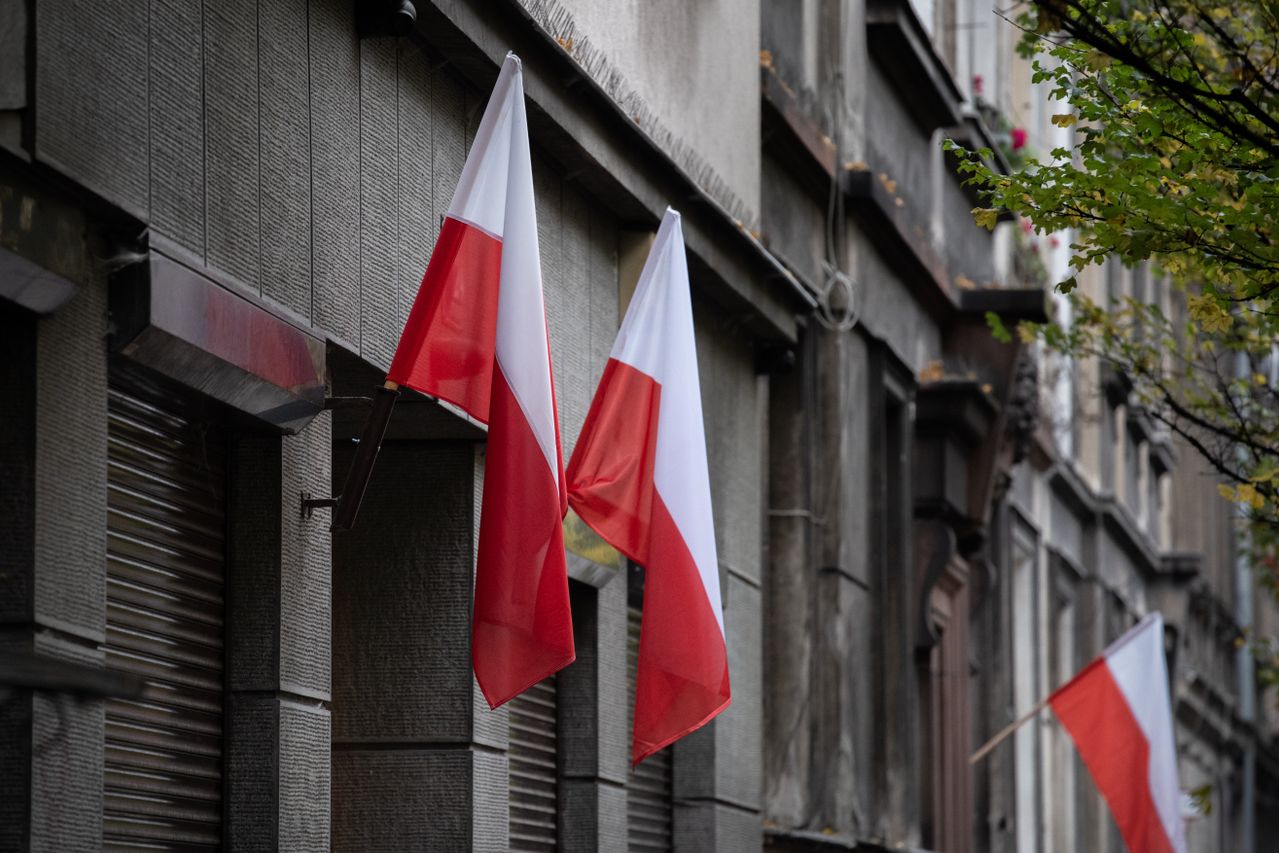
TL;DR — Poland is the biggest link-building opportunity in Europe that almost nobody is working properly. Google owns roughly 95% of Polish search, the media is world-class, and the English-speaking SEO industry treats the whole region as an afterthought. That gap is your opening.
This guide hands you the CEE Beachhead Model — win Poland first, then ripple out. You get the Polish media and directory targets that actually give links, the one weird thing about Czechia (a real second search engine called Seznam), the tactics that work in Polish, and the language details that separate a native-looking campaign from an obvious foreign one.
Monday-morning deliverable: a CEE market-entry scorecard that ranks which country to attack first, plus a Google-vs-Seznam checklist for Czechia. Copy both into a sheet and go.
New to this? Get the fundamentals of what backlinks are first. Then treat this as the Central European stop on the same regional tour we ran for India and South Asia.
Why Poland is the opportunity nobody’s working
Let’s be honest about how most Western SEO teams treat Central Europe. They don’t. Poland gets lumped into a vague “EU” bucket, someone runs a translated pitch through DeepL, and everyone’s surprised when it flops. Meanwhile the region quietly became one of the most digitally mature corners of the continent.
Here’s the setup. Poland is the biggest market in Central and Eastern Europe by a distance — roughly 38 million people, near-universal internet use, and a search market where Google sits around 95%. It has a genuinely strong domestic media ecosystem, a booming e-commerce sector anchored by homegrown giants, and a startup scene that keeps producing companies you’ve actually heard of. And because the content is in Polish, the competition for these links is thin. That’s the whole opportunity in one sentence: real authority, real audience, barely any competitors bothering to show up.
Think about what that competitive gap actually means in practice. In a saturated English niche, every decent publisher has been pitched a hundred times this month, every data angle has been done, and every good link is being fought over by teams with big budgets. In Poland, a lot of those same publishers have never received a well-crafted pitch backed by original Polish data, because the brands that could produce it defaulted to English and the brands that speak Polish rarely think in terms of digital PR. You’re not fighting for scraps in a crowded room; you’re often the only serious person in the room. That’s a very different — and much more favourable — place to build authority from.
The catch — and there’s always a catch — is that “Central Europe” is not one market. Poland, Czechia, Slovakia, Hungary and Romania share a rough profile but differ in language, media, and even which search engine matters. Get that wrong and you’ll waste budget translating the same press release five ways. Get it right and you’re building durable authority in markets your competitors have written off. The framework below is how you get it right.
How big is this actually?
Big enough to take seriously. Central and Eastern Europe is home to well over 100 million people once you add up Poland, Czechia, Slovakia, Hungary and Romania, and internet penetration across the core markets sits at Western-European levels. Poland alone is one of the larger economies in the EU and has spent two decades as the region’s growth engine. This is not an emerging frontier where you’re betting on future adoption; it’s a mature, high-spending digital market that happens to be badly under-covered in the English-language SEO world.
E-commerce is where the maturity shows most clearly. Poland runs one of the most developed online-retail sectors in Europe, and it did something unusual: it grew a homegrown marketplace, Allegro, into a national champion big enough to hold its own against Amazon on home turf. That matters for link building because it means the commercial web in Poland is genuinely local — local marketplaces, local price-comparison engines, local review culture — rather than a set of translated global platforms. Local commerce creates local link opportunities, and those opportunities are sitting there largely unworked.
There’s a business-services angle too. The region is a heavyweight in IT services, software development and shared-services centres — a huge share of Europe’s outsourced engineering and back-office work runs through Polish, Czech, Romanian and Hungarian hubs. For B2B and SaaS clients, that means a dense professional audience, active trade media, and a steady supply of the kind of industry news that earns links. In other words: whatever your client sells, there’s probably a real CEE audience and a real CEE press covering their category.
The CEE Beachhead Model
The idea is simple: don’t spread yourself thin across five countries at once. Take the beachhead first, prove the model, then ripple outward into markets that share Poland’s DNA. Three tiers, in order.
Tier 1 — Poland, the beachhead
Poland is where you start, full stop. It’s the largest audience, the deepest media pool, and the clearest single-engine SEO environment (it’s basically all Google). Win here first because the wins are biggest and the playbook is cleanest. Everything you build in Poland — the media relationships, the data assets, the outreach templates — becomes the template you adapt for the smaller markets. Nail the beachhead before you even think about the rest.
Tier 2 — the Seznam markets (Czechia, and by extension Slovakia)
Czechia is the one that breaks the “it’s all Google” assumption. It’s the only EU country with a serious homegrown search engine — Seznam — still holding low-double-digit share, higher on desktop. That means Czechia isn’t a translation of your Poland campaign; it’s a two-engine market that needs its own approach. Slovakia shares the language family and some of the same media orbit, so it rides along in this tier. Treat these as a distinct project, not a copy-paste.
Tier 3 — the fast-followers (Hungary, Romania, the rest)
Hungary and Romania are big, real markets (Romania especially, by population), but each has its own language, its own media, and its own quirks — Hungarian isn’t even related to the Slavic languages around it. These are worth doing once your Poland engine is humming and you’ve got the process down. They reward the same method, applied fresh per country. Don’t start here; arrive here.
So which country actually goes first when you can’t do them all? Score them. Here’s the prioritization rubric — your first Monday-morning deliverable. Rate each candidate market 1–5 on every row, weight by the multipliers, and the highest total is where you plant the beachhead.
| Scoring factor | Weight | What a 5 looks like |
| Revenue potential in-market | ×3 | Large, monetizable audience for your offer |
| Competitor link gap | ×3 | Rivals have thin or no local link profiles |
| Language/content readiness | ×2 | You already have native writers or budget for them |
| Media earnability | ×2 | Strong local press that publishes data + expert takes |
| Search simplicity | ×1 | Single dominant engine (Google-only) = simpler |
Read it like this: Poland almost always wins on revenue and simplicity, which is why it’s the default beachhead. But if your specific client already sells hard into Czechia or Romania, the scorecard can legitimately point elsewhere — and that’s the point of scoring instead of guessing.
Tier 1 in depth: winning Poland
Poland rewards the same core moves that work anywhere — great assets, real outreach, digital PR — but the targets are Polish, and that’s exactly why they’re wide open. Here’s where the links actually live.
The Polish media layer
Poland has a concentrated, genuinely powerful press. Three portals dominate: Onet (the largest — it reaches roughly 42% of Polish internet users weekly and ranks among the world’s top news sites by traffic), Wirtualna Polska (WP.pl), and Interia. Below the big three sit strong verticals: Gazeta Wyborcza and Rzeczpospolita in national news, and Bankier.pl, Money.pl, Puls Biznesu and Forbes Polska in business and finance.
These are real newsrooms with real standards, which means they behave like national press everywhere: they want stories, not adverts. The way in is genuine news value — original Polish data, a sharp expert take, a legitimate business story — delivered in native Polish. A single follow link from Onet or WP carries domestic authority that no amount of English link building will ever replicate, because it’s relevant in exactly the language and market the query lives in.
Reality check: if your story wouldn’t survive as a story in English, translating it into Polish won’t rescue it. Polish editors get pitched constantly. Earn the link on substance first, then localise — never the other way round.
How Polish outreach actually works
Poland is a relationship market, not a spray-and-pray one. The same journalists and editors recur across the big portals and the business titles, they talk to each other, and they remember who sent them a lazy translated blast. That cuts both ways: burn a relationship with a spammy pitch and you’ve damaged your standing across a meaningful slice of the ecosystem, but earn a reputation as a reliable source of good local data and you’ll get picked up again and again with far less effort.
The practical implication is to invest in a small number of genuine relationships rather than a giant cold list. A native Polish outreach lead who knows which editor covers what, pitches in fluent Polish, and shows up with genuinely useful material will out-perform a thousand-contact automated sequence every time. Treat the first few months as relationship-building, not volume, and let the compounding do the work later. This is slower to start and far more durable once it’s running — which is precisely why so few foreign competitors have the patience to do it.
Polish directories, e-commerce and community links
Under the press layer sits a base of Polish-specific link sources most foreign campaigns never touch:
- Polish business directories and local citations. Homegrown business listings and city directories anchor local relevance and feed the branded-search signal everything else depends on. Unglamorous, durable, hard for an outsider to assemble.
- The marketplaces. Allegro is a national institution — closer to a cultural fixture than a shop — and OLX owns classifieds. For e-commerce clients, presence, reviews and seller profiles here are the foundation the rest of the link profile sits on.
- Wykop.pl — “Polish Reddit.” A social news and link-sharing site where genuinely interesting content spreads. It won’t hand you clean follow links directly, but it drives the discovery and branded search that make everything else work, and it’s a barometer of whether Polish audiences actually care about your asset.
- Trade associations, universities and .gov.pl / .edu.pl. Sector bodies and Polish universities run member, partner and resource pages. A genuine collaboration or sponsorship earns a high-trust local link that competitors can’t easily copy.
None of this is flashy. That’s precisely why it works: it’s laborious for an outsider, it ages well, and it establishes the domestic legitimacy that makes your later press coverage land harder.
The tech and startup angle
Poland isn’t just a consumer market — it has a real, export-facing tech scene, and for the right client that’s a second, richer seam of links. The country produced globally recognised names in gaming and software, a healthy crop of scale-ups in health-tech, fintech and marketplaces, and a deep bench of engineering talent that international companies keep hiring and acquiring. There’s a dedicated Polish and CEE tech press covering funding rounds, launches and industry moves, plus regional startup media that follow the whole Visegrád ecosystem.
If your client is a startup or a B2B software business, that ecosystem hands you the same milestone-driven link flywheel that works in any tech market: funding announcements, product launches, notable hires, partnership news and original research all earn coverage — and coverage brings follow links from high-authority domains. The trick, as always, is that each announcement has to be genuinely informative rather than promotional. Polish tech journalists have plenty to write about and no patience for empty releases. Give them a real number, a named spokesperson and a clean assets pack, and be the easiest company in your category to write about.
Tier 2 in depth: the Seznam thing in Czechia
This is the part everyone gets wrong. In Czechia, Google is dominant but not alone — Seznam still holds around 12% of all-device search and materially more on desktop. That makes Czechia one of the only Latin-script countries on earth where a local engine still matters. If you run a pure Google playbook there, you’re leaving a chunk of the market on the table.
Seznam is a whole ecosystem, not just a search box
Seznam runs its own crawler (SeznamBot), its own PPC platform (Sklik, usually with cheaper clicks than Google Ads), its own shopping comparison engine (Zboží.cz), its own maps (Mapy.cz) and — crucially for link builders — its own business directory (Firmy.cz). It also operates one of the country’s biggest news properties, Seznam Zprávy. So “optimising for Seznam” means feeding a small local ecosystem, not just tweaking a ranking factor.
Why bother with a 12% engine at all? Two reasons. First, that share is concentrated on desktop and among older, often higher-intent users — exactly the audience that matters for a lot of considered purchases. Second, and more importantly for link builders, the competition to be visible on Seznam is even thinner than on Czech Google, because most foreign brands don’t know it exists. Seznam Zprávy is a genuine top-tier news source, Firmy.cz is a real citation source, and almost nobody outside Czechia is optimising for either. That’s a textbook underserved channel: modest total share, minimal competition, high local trust.
What actually differs for Seznam
- It’s a Czech-language specialist. Seznam is built for Czech long-tail queries and understands local content deeply. Native Czech content isn’t a nice-to-have here; it’s the entire ballgame.
- Keep navigation in simple HTML. SeznamBot handles JavaScript less completely than Google. Make sure your Czech pages expose navigation and internal links in plain HTML so the whole site gets crawled and indexed.
- Mind the diacritics in URLs. Czech is full of accented characters (č, š, ž), but keep them out of URLs — accented URLs cause indexing headaches on both engines. Clean, unaccented slugs, accented content.
- Get listed on Firmy.cz. Seznam’s directory is a genuine local-citation source and a ranking signal inside its ecosystem. It’s the Czech equivalent of nailing your foundational listings.
Where this breaks: don’t over-invest in Seznam for a mobile-first, youth-skewing client — that’s where Google’s share is closest to total. Seznam over-indexes on desktop and older users. Match the effort to where your buyer actually searches, and treat the second engine as an edge, not the main event.
Tier 3 in depth: Hungary, Romania and the rest
Once Poland is working and you’ve learned the region’s rhythms, the fast-followers open up — and each rewards the same method with fresh, per-country execution.
- Romania is the second-biggest market in the region by population, effectively a Google-only search environment, with a lively press and — usefully — a Romance language that’s a bit more accessible to Western teams than the Slavic ones. Strong, underserved, worth doing properly.
- Hungary is a solid market with a serious catch: Hungarian is a non-Indo-European language unrelated to anything around it, so there are zero shortcuts on content. Budget for genuinely native Hungarian work or don’t bother — half-measures read as foreign instantly.
- Slovakia is smaller, shares linguistic and media proximity with Czechia, and often gets bundled into a Czech-Slovak program. Seznam matters less here than in Czechia, but the Czech-market relationships and assets frequently carry over.
The rule across all three: they’re arrival destinations, not starting points. Prove the model in Poland, systematise it, then run the same play per country with native language and local media at the centre.
A useful way to sequence the fast-followers: go where your client already has commercial pull. If sales data shows real demand in Romania, that market jumps the queue regardless of its position in the generic tier list, because you’ll have local proof points, possibly local partners, and a reason for local media to care. Absent that signal, Romania’s combination of size, a Google-only search environment and a relatively accessible Romance language usually makes it the most efficient second-language market to add after Poland — with Czechia slotting in wherever the Seznam opportunity is worth the extra complexity for that specific client.
Timing: the Polish and CEE calendar
This is free performance most people leave on the table. Outreach that ignores the local calendar burns sends and misreads results. A few things to build into the plan:
- The summer slowdown is real. Like much of continental Europe, CEE newsrooms and businesses wind down through late July and August. Pitches sent into the peak-holiday weeks disappear. Plan campaigns around it, not into it.
- The Christmas–New Year and Easter lulls. The region is culturally Catholic-heavy, and the December holidays plus the Easter period both empty the business calendar for a week or more. Treat them like the UK Christmas shutdown.
- Long weekends cluster in spring. Poland in particular has a run of public holidays in late April and May that produce “bridge” long weekends where editorial output thins out. Check the local holiday calendar before scheduling a big send.
- Commercial peaks are your hooks. Back-to-school, Black Friday and the pre-Christmas shopping run are enormous in Polish e-commerce and make natural, timely pegs for data stories and seasonal campaigns — plan those assets months ahead.
None of this is complicated, but getting the cadence right — strong sends in the productive weeks, assets prepped ahead of the commercial peaks, nothing important fired into a holiday — quietly lifts response rates across the whole program.
The tactics that actually earn links across CEE
Whatever tier you’re in, the same short list of moves produces the links — the language and the publisher change, the method doesn’t. Ordered roughly by return:
- Local original research. Country-specific data is the single best asset in the region. A survey of Polish consumers, an index of some corner of the Czech economy, a Romanian market analysis — real local data gives journalists a reason to cite you that nobody else is offering. Most brands recycle global stats; almost nobody commissions genuinely Polish or Czech numbers. Publish in the local language with the local angle up front.
- Expert commentary and reactive PR. CEE business media moves fast and needs quotable local experts. A spokesperson who can react to the day’s story — a regulation, an economic figure, a big local deal — in native Polish or Czech earns quotes and links from outlets on deadline. This is newsjacking, tuned to each market’s news cycle.
- Digital PR with a national hook. Stories framed specifically around the country travel far better than global studies with a local footnote. “What Poles actually spend on X” beats “global report, Poland section” every time. Design the campaign from the local question outward. And don’t stop at the national portals: Poland has a strong regional and city press — dailies and news portals for Włocławek, Kraków, Gdańsk, the Silesian towns and dozens more — that will cover a story with a genuine local angle when the nationals won’t. Regional data breakdowns (“here’s how your city compares”) are a reliable way to multiply one dataset into many placements.
- Contributed content and bylines. Polish and Czech business and trade publications run contributor programs. A well-positioned executive can earn a steady run of byline placements a year, each a follow link from a high-authority domain — provided the writing is genuinely native.
- Local partnerships and sponsorships. Partnership announcements, event sponsorships and university or association tie-ins are reliable, repeatable link sources across the region, and they double as the trust signals that make cold press outreach land. Local trade fairs and industry events — of which Poland has a lot — are especially good value: a genuine sponsorship or speaking slot earns a link plus a relationship, and it signals to editors that you’re a real participant in the market rather than a drive-by foreign brand.
One quality note that applies to every tactic above: the region has its share of low-value link sellers and “buy 50 Polish backlinks” gigs, and they’re a trap. The whole reason CEE is worth doing is that genuine, editorially-earned local links are cheap relative to their value — spraying paid junk links throws that advantage away and imports risk. Earn the links; don’t buy them by the kilo.
For the platforms that make running a multi-country, multi-language program survivable — prospecting, outreach, and monitoring without losing your mind — see our best link building tools guide. The make-or-break feature for CEE is clean per-language, per-market segmentation.
The 2026 wrinkle: AI answers in Polish and Czech
Here’s a shift worth getting ahead of. AI answer engines — ChatGPT, Gemini, Perplexity, Copilot and the AI Overviews baked into Google — are increasingly how people get answers, and they behave differently in smaller-language markets than they do in English. That creates both a risk and an opening for anyone building links in CEE.
The risk: there’s simply less high-quality Polish, Czech, Hungarian and Romanian content in these models’ training and retrieval pools than there is English content. So when someone asks an AI engine a question in Polish, it’s drawing from a thinner set of sources — which means the handful of brands with genuinely strong, well-cited local content get a disproportionate share of the citations. The opening: if you’re one of the few producing authoritative native-language content and earning real local links around it, you’re far more likely to be the source these engines quote in your category. Scarcity of good local content is the whole advantage.
Practically, this reinforces everything above rather than changing it. Original local-language research, expert commentary picked up by trusted local media, and a clean, well-structured native site are exactly what both classical rankings and AI citations reward. The brands that win the Polish AI answer are the same brands winning the Polish SERP: the ones showing up in the local language with real substance behind them. Building for one builds for the other.
Don’t forget community signals. AI engines increasingly weigh what real users say about a brand, not just what the brand says about itself. In a networked market like Poland, presence and genuine sentiment on places like Wykop and active Polish communities feed the reputation these engines read — another reason your local footprint has to be real, not bolted on.
Language and technical details that make or break it
This is where foreign campaigns quietly die. None of it is optional polish — it’s the difference between a placement that reads native and one an editor bins on sight.
Transcreate, don’t translate
Machine-translating an English pitch and firing it at a Polish editor is the fastest route to the trash folder. Polish and Czech outreach has to be written by someone who thinks in the language — the register, the idiom, the sense of what counts as a story all differ. Budget for native writers the same way you would in any serious local-language market. Machine translation is a tell that marks you as an outsider before the editor reaches your second sentence.
Respect the diacritics — and where they belong
Polish (ą, ć, ę, ł, ń, ó, ś, ź, ż) and Czech (č, ř, š, ž, ů) are full of accented characters. Two rules. In content and anchor text, use the correct accented spelling — it signals native quality and matches how people actually search. In URLs, strip the accents to clean ASCII slugs to avoid indexing problems. Accented content, unaccented URLs. Getting this backwards is a classic outsider error.
Match anchors to the language
Anchor text on Polish placements should generally be Polish, and Czech placements Czech, to match the surrounding content and the query it reinforces. An English anchor dropped into a Polish article looks unnatural and reads as off-language. Where your brand is a Latin-script name, let it appear as the brand — but keep the surrounding anchor and context in the local language.
One more foundation point. Decide your international architecture — local ccTLDs (.pl, .cz) versus subfolders — and how link equity flows across it before you start earning links. Retrofitting it later wastes the authority you built. Get the technical base right, then point local links at a target that can actually hold their value.
Deliverable: the Google-vs-Seznam checklist for Czechia
The scorecard earlier tells you which country to enter first. This checklist tells you what to do differently the moment you’re working Czechia. Run every Czech project against it:
| Check | Why it matters |
| Native Czech content and outreach | Seznam is a Czech-language specialist; it’s the whole game |
| Navigation and internal links in plain HTML | SeznamBot handles JavaScript less completely than Google |
| Clean, unaccented URLs | Accented slugs cause indexing issues on both engines |
| Listed on Firmy.cz | Seznam’s directory is a local citation + ranking signal |
| Consider Sklik + Zboží.cz for paid/shopping | Often cheaper clicks; captures the Seznam-only audience |
| Effort matched to desktop/older-user skew | Don’t over-invest in Seznam for mobile-first youth audiences |
For Poland and the Google-only markets, you don’t need this at all — which is exactly why Poland is the cleaner, faster beachhead.
Measurement and the mistakes to dodge
Measure every country separately or you’ll learn nothing useful. Segment referring domains, organic traffic and rankings by market and language, the same way you’d run a separate model per market in any cross-border program. A blended dashboard hides the fact that a Polish link moves the Polish SERP and a Czech link moves the Czech one — and on Seznam, possibly a different SERP again.
Watch the attribution window, too. Relationship-led programs like these have a slow-burn shape: months of foundation-building and relationship-warming produce little visible movement, and then earned placements and rankings start compounding together. A six-week measurement window will make a healthy CEE program look like a failure right before it starts working. Run at least three measurement layers on their own cadences — an acquisition dashboard weekly (links won, referring-domain count, average authority), a search layer monthly (per-country organic and keyword movement, including a separate Seznam check for Czechia), and a business layer quarterly (leads and revenue by market) — and judge the program on the trajectory across quarters, not the first month’s raw link count.
The recurring, expensive mistakes in this region are predictable:
- Treating CEE as one market. Five languages, several media ecosystems, and at least one extra search engine. One translated campaign for all of them serves none of them.
- Machine-translated outreach. The clearest outsider tell there is, and an instant decline from serious editors.
- Ignoring Seznam in Czechia. Or, just as bad, over-weighting it for the wrong audience. It’s an edge to be sized correctly, not a factor to skip or worship.
- Starting everywhere at once. The beachhead model exists because spreading five ways from day one guarantees five mediocre programs instead of one great one that funds the rest.
- Importing US velocity norms. A thinner competitive field means natural link velocity looks different here; calibrate to the market rather than a saturated English niche.
Realistic cost, timeline and effort
Set expectations honestly. Cost-per-link across CEE tends to run below a comparable competitive Western campaign — thin competition and lower publisher demand see to that — but it is not low-effort, because every placement needs native-language work you can’t fake with a tool. The trade is good: lower cost, higher labour specificity, durable results once relationships form. On timeline, both the beachhead and the ripple reward patience — expect the first couple of quarters to be foundation-building (directories, relationships, first earned placements) and the compounding to arrive after. Resource to the plan: native Polish capability first, then add Czech (with its Seznam wrinkle), then the fast-followers as you scale.
The bottom line
Central Europe rewards operators who refuse to treat it as a single blurry “EU” bucket. Take Poland first — it’s the biggest audience, the deepest media pool, and the cleanest single-engine SEO market in the region, and the language barrier that scares off foreign agencies is exactly the moat that keeps your links cheap and durable. Then ripple out: handle Czechia as the genuine two-engine market it is, thanks to Seznam, and bring in Romania, Hungary and Slovakia once your Polish engine is proven and systematised.
The mistake almost everyone makes is waiting. They keep meaning to “get to” Central Europe once the English markets are handled — which never quite happens — while the window of low competition stays open a little longer than it should. It won’t stay open forever. The brands that plant a proper Polish beachhead now, with native content and real local relationships, are building an authority moat that will be genuinely hard to dislodge by the time everyone else notices the region exists. Early and native beats late and translated every single time.
Run the market-entry scorecard on your next CEE prospect, plant the beachhead where it points, and measure each country apart. For the wider method this sits inside, keep the core strategies hub, the 2026 statistics, and the rest of the regional series — including the Africa playbook — close at hand. Same lens, fresh market, every time.