









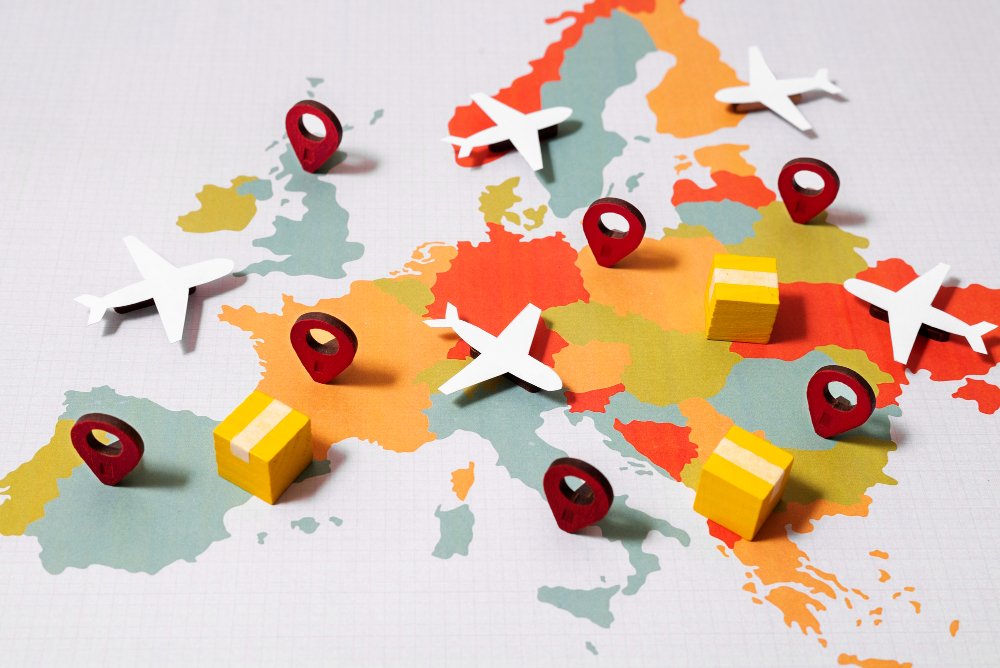
European link building is not a single discipline. The continent that produced the Hanseatic League, the Holy Roman Empire, and the European Union remains, from a search marketing perspective, a federation of distinct media ecosystems, journalistic cultures, and linguistic markets — each with its own rules of engagement. A campaign that succeeds in Munich will often fail in Stockholm. A pitch that resonates in Madrid may be ignored in Amsterdam. The publishers, citation conventions, and trust signals that define authority in one market are frequently irrelevant in another.
This guide is a strategic framework for link building across three of the most commercially significant European blocs in 2026: the DACH region (Germany, Austria, German-speaking Switzerland), the Nordics (Sweden, Norway, Denmark, Finland, and Iceland), and Southern Europe (Spain, Italy, Portugal, and Greece). It is written for SEO professionals, in-house marketers, and agency strategists who already understand the fundamentals of link acquisition and now need to operate across borders without losing campaign efficiency or local credibility.
If you are newer to link building generally, the principles in this article will make more sense after reading our foundational coverage on what link building is and the 15 link building strategies that underpin most modern campaigns. The European-specific tactics below build on top of that foundation rather than replacing it.
What this guide covers
- How European link building differs from UK and US campaigns at a structural level
- Market-by-market dynamics, publisher landscapes, and outreach norms for DACH, the Nordics, and Southern Europe
- Language strategy: when to translate, when to commission native writers, when to skip a market entirely
- GDPR-aware outreach: cold email rules, data sourcing, and a 2026 compliance checklist
- EEA-specific tactics including digital PR, journalist databases, and link earning through European industry data
- A measurement framework for cross-border campaigns where rankings, currencies, and conversion patterns differ
1. Why European link building is not just “international SEO with a twist”
There is a tendency in English-language SEO content to treat Europe as a single addressable market — a polite assumption that flatters neither the marketer nor the audience. The reality is that Europe contains 24 official EU languages, more than a dozen regulatory frameworks affecting digital communication, and publisher economies that range from heavily institutional (Germany, France) to startup-driven and digitally-native (the Nordics, the Baltics).
According to the European Commission’s 2025 DESI report, digital integration across member states still varies by more than 30 percentage points on key indicators, and that variance shows up directly in how publishers operate, how journalists prefer to be contacted, and what counts as a credible source within each national media system. A backlink from Süddeutsche Zeitung carries different weight in the German-speaking world than a link from a German-language regional blog of similar domain authority — even when third-party metrics suggest equivalence.
The structural differences that matter most
Three structural differences shape every European campaign:
- Publisher concentration. Germany, France, and Italy retain heavily concentrated traditional media ownership, where a small number of publishing houses control disproportionate share of the high-authority press. The Nordics, by contrast, have unusually fragmented digital-native media. Outreach effort allocation should reflect this: targeting in DACH means deeper relationships with fewer publishers; targeting in Sweden means broader, lighter coverage across many digital outlets.
- Trust hierarchies. Italian and Spanish readers tend to weigh personal authorship and named-journalist bylines heavily; Nordic readers weigh institutional credibility (universities, government bodies, established trade associations); German readers weigh procedural rigour and citation depth. Earned links should be designed to satisfy the relevant trust hierarchy, not a generic global one.
- Communication norms. Cold outreach tolerance varies dramatically. German journalists generally expect formal salutation, third-person framing, and a clear declaration of intent in the first sentence. Spanish and Italian editors are receptive to warmer, relationship-led approaches. Nordic editors tend to value extreme brevity and dislike anything that reads as marketing copy. A single cold-email template will not survive contact with all three blocs.
2. The DACH market: precision, formality, and earned credibility
The DACH region — Germany, Austria, and German-speaking Switzerland — represents Europe’s largest single-language commercial bloc, with a combined population of roughly 100 million and the continent’s deepest enterprise B2B economy. For most agencies, DACH is the European campaign that justifies the highest investment in localisation, because the cost of doing it badly is reputational damage that German-language publishers tend not to forget.
Market dynamics in 2026
Three structural facts define link building in DACH in 2026:
German publisher consolidation has accelerated. Axel Springer, Funke Mediengruppe, and Bertelsmann’s RTL Group control a substantial share of national press authority. Most high-DR earned links in Germany flow through publications owned by fewer than ten parent groups, which means relationship-building with editors carries unusually high lifetime value relative to one-off pitches.
The .de TLD remains dominant for trust signals. German-language users still significantly prefer .de domains over generic TLDs, and Google.de continues to weight country-coded signals in its evaluation of local relevance. A German campaign that targets only .com publications will underperform an equivalent campaign on .de outlets, even at lower domain authority.
GDPR enforcement is most stringent in Germany. German data protection authorities (the federal BfDI plus 16 state-level regulators) issue more cold-outreach-related fines than any other EU member state. Compliant outreach in DACH is not an option — it is a precondition for sending email at all.
Tactics that work in DACH
1. German-language digital PR campaigns built around proprietary data. German journalists strongly favour pitches that contain original numerical findings, ideally with methodology disclosed. A study with a sample size of 1,000+ German respondents and a transparent methodology will outperform a similar study without methodology by a factor of 3–5x in pickup rate. This is the single highest-leverage tactic in the DACH market.
2. Trade association and chamber of commerce listings. The IHK (Industrie- und Handelskammer) network, regional trade bodies like the BVMW, and sector-specific Verbände offer high-trust niche-edited directory placements that German B2B audiences read as legitimacy markers. These are not directory submissions in the spammy sense — they require membership, verification, and often nominal annual dues, but they produce links that survive algorithm updates indefinitely.
3. Fachpresse (trade press) outreach. Germany has an unusually deep specialist trade press across manufacturing, automotive, life sciences, and finance. Publications like Manager Magazin, Handelsblatt, and sector-specific titles like VDI nachrichten reach professional audiences who place orders worth millions of euros. A single trade press placement will frequently outperform ten consumer press hits on revenue attribution.
4. University and research institution partnerships. German .edu equivalents — .uni-* domains and Fraunhofer institute sites — accept guest contributions, conference proceedings, and collaborative whitepapers more readily than US or UK academic sites. The friction is higher (peer review, German-language requirements) but the trust transfer is substantial.
DACH outreach norms (2026 update)
German outreach is a discipline of precision. The standards have not loosened in 2026, despite the rise of AI-generated outreach in other markets — if anything, German journalists have become more sensitive to formulaic AI-written pitches and reject them at higher rates. Our analysis of cold email response rates shows German-language outreach lifts response rates by 2.4x over English-language equivalents to the same recipients, but only when the German is grammatically correct and uses correct salutation conventions.
Minimum DACH-compliant outreach standards:
- Address recipients by full title (Sehr geehrter Herr Dr. / Sehr geehrte Frau Dr.) on first contact
- Open with a single-sentence reason for writing — Germans dislike preamble
- Disclose commercial intent immediately if any exists; obscured intent is treated as deception
- Include Impressum-equivalent contact information in your signature (real name, real company, real address)
- Sign in German if writing in German; mixed-language sign-offs are read as careless
- Never follow up more than twice; the threshold for being marked as spam is lower than in any other major market
3. The Nordics: digital-native, brand-led, and unusually transparent
The Nordic markets — Sweden, Norway, Denmark, Finland, and Iceland — combine some of Europe’s highest internet penetration rates with some of its most distinct media cultures. Combined population is roughly 27 million, but per-capita digital ad spend, B2B SaaS adoption, and willingness to engage with foreign brands consistently rank among the world’s highest. For UK agencies serving fintech, SaaS, sustainability, and DTC clients, the Nordics often deliver disproportionate ROI relative to their size.
Market dynamics in 2026
English fluency is near-universal but doesn’t license English-only campaigns. Roughly 90% of working-age Swedes, Norwegians, and Danes read English comfortably, and Finland is not far behind. This sometimes leads foreign agencies to default to English-language outreach. It works — sort of. The tradeoff is that local-language outreach delivers materially better placement quality, because local-language pitches signal commitment and reach editors who don’t routinely cover international content.
The publisher landscape is digitally fragmented. Unlike DACH, where authority concentrates in a small number of large groups, the Nordics have many mid-sized digital-native publications with strong domain authority and fast editorial cycles. Breakit (Sweden, tech), Shifter (Norway, startups), Børsen (Denmark, business), and Talouselämä (Finland, business) are examples of publications that punch above their weight. A successful Nordic campaign typically targets 15–25 mid-tier publications rather than 3–5 top-tier ones.
Sustainability and ESG framing materially improves placement rates. Across all five Nordic countries, editorial appetite for ESG-aligned stories — climate impact, supply chain transparency, gender pay equity, accessible design — is significantly higher than the European average. Even commercially-flavoured stories see substantially higher pickup when an authentic sustainability angle is present.
Tactics that work in the Nordics
1. Brevity-led cold email. Nordic editors are perhaps the most sensitive in Europe to email length. A 3-sentence pitch with a single clear ask will outperform a 7-sentence pitch with full context. The general principles in our guide to email outreach for link building hold globally, but the optimal length skews 30–40% shorter for Nordic recipients.
2. Original Nordic-specific data. Surveys, indices, and benchmarks that segment results by Nordic country (rather than lumping them as “Scandinavia” or “the Nordics”) receive disproportionate journalist interest. The willingness to disaggregate Sweden/Norway/Denmark/Finland in your dataset signals that you respect their distinctness, which Nordic editors notice.
3. LinkedIn-led relationship building. Nordic professionals use LinkedIn more intensively per capita than almost any other European market. Relationship-building before the pitch — engaging genuinely with a journalist’s posts for several weeks before any outreach — has unusually strong returns here. Cold pitching to a Nordic journalist who has never seen your name is roughly half as effective as warm pitching to one who has.
4. Podcast guesting. The Nordic podcast economy is mature and link-friendly. Most major business and tech podcasts publish episode show notes with guest links — a single high-quality podcast appearance often produces 5–15 follow-on backlinks as the episode is referenced and embedded across the host’s network. This is one of the highest-yield organic tactics in the region.
Nordic outreach norms (2026 update)
Standards for Nordic outreach in 2026:
- Lead with the news value, not the relationship hook — Nordic editors find excessive warmth performative
- Use first names from the first email; surnames-only feels distant in a culture with low formality
- Be transparent about commercial intent; Nordic media culture treats opacity as a red flag
- Sign with full name, role, and company — not first name only
- Follow up at most once, after 5–7 working days; aggressive follow-up is culturally jarring
- If a journalist declines, accept and remember it; Nordic editor turnover is low and reputations stick
4. Southern Europe: relationship-driven, slower-cycle, higher-yield
Southern Europe — Spain, Italy, Portugal, and Greece — is the European market most often underserved by UK and US agencies, despite combined population of more than 130 million and a digital ad market that has grown faster than the EU average for five consecutive years. The under-service is partly cultural: Southern European link building rewards slower relationship-building and faster informal communication, which is the inverse of the rhythm most Anglo-Saxon agencies operate at.
Market dynamics in 2026
Personal relationships matter more than processes. Across Spain, Italy, Portugal, and Greece, journalists overwhelmingly prefer warm introductions, in-person events, and ongoing informal contact over pure cold outreach. A WhatsApp message from a known contact will routinely outperform a perfectly-written cold email. This is not a flaw in the market — it is the market.
Print-to-digital transition is still in progress. Major newspapers — El País, La Repubblica, Público, Kathimerini — retain disproportionate authority because their digital arms inherit decades of brand equity. A link from elpais.com still carries weight that Anglo SEOs sometimes underestimate.
Editorial cycles run differently. August in Spain and Italy is a near-total publishing freeze. December in Greece and Portugal slows substantially. Campaign timing that ignores these rhythms wastes effort. The optimal Southern European publishing windows in 2026 are mid-January to mid-July, and mid-September to mid-November.
Tactics that work in Southern Europe
1. Native-language original content with strong narrative arcs. Spanish and Italian readers respond to journalism that tells a story rather than presenting a list of findings. Translating a UK data study into Spanish without re-narrativising it underperforms commissioning a Spanish writer to rebuild the article around a human-interest framing. The data is the same; the structure is not.
2. Industry events and conference sponsorship. Sponsorship of mid-tier industry events in Madrid, Milan, Lisbon, and Athens produces backlinks that are rarely available through pure outreach. Conference sites, agenda pages, and speaker bios often link out, and these links sit on long-lived domains with strong topical relevance.
3. Co-authored expert content. Italian and Spanish editors are notably receptive to co-authored articles where a known industry figure shares the byline. A piece on Spanish fintech regulation co-authored with a recognised Spanish lawyer or analyst will frequently place where a single-authored piece by a foreign brand will not.
4. Local university and association partnerships. Spain’s CSIC research network, Italy’s CNR, Portugal’s FCT-funded research centres, and Greek university research groups regularly publish industry-collaborative content. The bureaucratic friction is real, but the resulting links sit on ac.* and gov.* domains with permanent value.
Southern Europe outreach norms (2026 update)
Outreach in Southern Europe rewards patience. Our breakdown of cold email outreach techniques applies, but with two structural adjustments: longer warm-up sequences before the ask, and far higher tolerance for follow-up than Northern markets allow.
- Use formal salutation initially (Estimado/a, Egregio, Caro/a, Αγαπητέ) and shift to first names only after rapport is established
- Lead the first message with shared context — a recent article they wrote, a mutual connection, an event you both attended
- Permit yourself 3–4 follow-ups across 3–4 weeks; this is acceptable here in a way it would not be in Germany
- Phone calls and WhatsApp are legitimate channels; LinkedIn DMs are heavily used in Italy and Spain
- Build relationships in person where possible — Southern European editors reciprocate face-to-face contact disproportionately
- Accept that timelines are longer; a campaign that closes 5 placements in 6 weeks in Sweden may take 14 weeks for the same yield in Italy
5. European market comparison: outreach norms at a glance
The table below summarises the fundamental differences in outreach approach across the three blocs. It is intentionally simplified — a working model, not a complete description — but useful as a campaign planning reference.
| Dimension | DACH | Nordics | Southern Europe |
| Optimal email length | Medium (150–250 words) | Short (60–120 words) | Medium-long (180–300 words) |
| Salutation register | Highly formal | First name acceptable | Formal initially |
| Follow-up tolerance | 1–2 maximum | 1 maximum | 3–4 across weeks |
| Local language preference | Strongly preferred | Preferred but not essential | Strongly preferred |
| Warm intro effectiveness | Moderate | High | Very high |
| Optimal channel mix | Email primary | Email + LinkedIn | Email + LinkedIn + WhatsApp |
| Aug/Dec slowdown | Moderate | Moderate | Severe |
| Data-led pitch lift | Very high | High | Moderate |
| Narrative-led pitch lift | Moderate | Moderate | Very high |
| Sustainability angle | Moderate | Very high | Moderate |
6. Language strategy: when to translate, when to commission, when to skip
The most expensive mistake in European link building is treating language strategy as a translation problem rather than a content production problem. Machine translation, even at 2026 quality levels, produces linguistically correct text that lacks the journalistic voice, idiomatic rhythm, and cultural references that distinguish credible local content from foreign content awkwardly clothed in local words. European editors detect this immediately and discount accordingly.
A decision framework for language investment
Translate (machine + light human edit) when: the asset is a research study where the data is the story, the audience is technical/financial professionals comfortable reading translated content, or the placement is on a publication that itself runs translated content (many B2B trade titles do).
Commission native writing when: the campaign targets consumer audiences, the asset’s value depends on narrative quality (op-eds, thought leadership, founder stories), or the placement is at top-tier press where editorial standards demand native fluency.
Skip the market when: the budget will not support either of the above. Half-effort localisation produces worse results than no presence at all, because it places weak content under your brand name in front of editors who remember.
This decision sits upstream of tactic selection. Many of the link building tools we cover support European-language workflows, but no tool compensates for under-investment in language quality. The tools accelerate good strategy; they do not rescue bad strategy.
7. GDPR-compliant outreach across the EU and EEA
Cold outreach within the EU and EEA is governed by the General Data Protection Regulation, the ePrivacy Directive, and member-state-level implementations that occasionally diverge. The 2024 ePrivacy Regulation update did not, despite earlier expectations, fundamentally restructure the regime, but enforcement has tightened. According to the European Data Protection Board’s 2025 annual report, direct-marketing-related complaints rose 18% year-over-year, and roughly two-thirds of cold-outreach fines now relate to insufficient legal basis for processing recipient data.
The B2B legitimate interest position
Most cold outreach for link building falls under the GDPR’s legitimate interest lawful basis (Article 6(1)(f)). This is workable but not unconditional. A defensible legitimate interest position requires:
- A documented Legitimate Interests Assessment (LIA) before campaigns launch
- Clearly identifiable B2B context — outreach to a publicly listed editorial inbox is different from outreach to a personal address scraped from LinkedIn
- Genuine relevance — the recipient’s role must align with the pitch topic; mass-undifferentiated outreach fails the necessity test
- An explicit and easy opt-out mechanism in every email, honoured in real time
- A privacy notice describing your processing, accessible from a working URL in the email signature
Country-specific layers in 2026
Germany. The strictest interpretation across the EU. Cold B2B email is permitted only where the recipient’s role makes the pitch demonstrably relevant. Mass outreach campaigns that cannot defend role-relevance per recipient are routinely fined.
Spain and Italy. Both interpret B2B legitimate interest reasonably permissively, but require strict opt-out compliance. Italian regulators (Garante) have been particularly active on opt-out enforcement.
The Nordics. Sweden, Denmark, and Finland operate under the GDPR plus generally pragmatic DPA guidance. Norway and Iceland implement GDPR through EEA mechanisms with similar effect. Compliance overhead is moderate; cultural intolerance for spam is high.
A practical 2026 compliance checklist
- Document a Legitimate Interests Assessment before sending the first email of any campaign
- Maintain a record of where each recipient’s contact information was sourced and on what date
- Use sending tools that automatically suppress recipients who have opted out at the domain level
- Include a working privacy policy URL in every cold email signature
- Route any subject access requests (SARs) to a monitored inbox; 30-day response deadlines are non-negotiable
- If using AI to personalise outreach, disclose this in your privacy notice; some EU regulators now consider it material
None of this prevents effective outreach. Compliant outreach often outperforms non-compliant outreach because it forces the discipline of role-relevance, list quality, and genuine personalisation. The tactics in our guide to cold email outreach are designed to operate within these constraints rather than around them.
8. European earned-link tactics that work in 2026
Pan-European data studies
A single research study that reports findings broken down by EU member state will earn placements across multiple national markets simultaneously. The economics are compelling: one production effort, 10–20 country-level pickup opportunities. Methodological transparency matters — European editors, particularly in DACH and the Nordics, scrutinise methodology more closely than UK or US counterparts. Sample size disclosure, weighting methodology, and confidence intervals should be standard.
Eurostat and ECB data leverage
Original analysis built on top of Eurostat or European Central Bank data is one of the most reliably effective digital PR tactics in the EU. The data is free, authoritative, and updated on predictable schedules; the angle is whatever your industry can connect to it. Inflation, labour markets, cross-border e-commerce, energy consumption, demographic shifts — each provides a steady stream of news pegs.
National statistical office tie-ins
Each EU member state’s statistical office (Destatis in Germany, INE in Spain, ISTAT in Italy, SCB in Sweden, INSEE in France, etc.) publishes scheduled data releases that local journalists routinely cover. Producing analysis or industry commentary timed to a known release date positions your brand as a natural source. This is particularly effective in DACH and the Nordics, where journalists actively look for expert quotes around statistical releases.
EU regulatory timeline plays
The European legislative calendar — AI Act milestones, Digital Services Act enforcement decisions, sustainability reporting deadlines — generates predictable spikes in journalistic demand for expert commentary. Brands that publish analytical content 2–3 weeks ahead of major regulatory milestones capture the news cycle that follows.
European awards and rankings
National and pan-European industry awards generate links from awards-adjacent press, the awarding bodies’ own sites, and finalists’ marketing materials. The cost of entering or sponsoring an established award is typically lower than producing an equivalent earned-PR campaign, and the resulting links are durable.
Embassy, chamber of commerce, and trade body engagement
UK, Irish, German, French, Italian, and Spanish chambers of commerce in foreign markets routinely list member businesses, publish member commentary, and link out to member resources. The Nordic-British chambers, the German-British Chamber of Industry & Commerce, and the Italian Chamber of Commerce in the UK all offer well-trafficked listings that compound over years.
9. Measuring cross-border European campaigns
Cross-border measurement is harder than domestic measurement, and pretending otherwise is the source of much wasted European link building budget. Three measurement complications appear specifically in EU campaigns:
Currency and conversion variance. A click from Sweden, where average B2B AOV may be 30% higher than in the UK, contributes differently to revenue than a click from Portugal. Pure traffic-volume reporting flatters the wrong markets.
Search market structure. Google’s market share in most EU markets exceeds 90%, but local search behaviours differ. SERP feature prevalence, query volumes, and keyword difficulty vary substantially. Aggregating European traffic into a single “international” bucket obscures more than it reveals.
Attribution lag. German B2B sales cycles routinely run 4–9 months. Italian and Spanish cycles often run shorter but with more touchpoints. A six-week post-campaign measurement window will systematically under-report DACH performance.
A measurement framework that works for European campaigns
Adopt three measurement layers, each on its own cadence:
- Acquisition layer (weekly): link volume, referring domain count, average DR/DA of acquired links, country-of-origin distribution. This is the operational dashboard for the campaign team.
- Search layer (monthly): country-segmented organic traffic, keyword movements per market, SERP feature capture per locale. This is the SEO impact dashboard.
- Commercial layer (quarterly): market-level pipeline contribution, weighted by AOV and sales-cycle length. This is the executive dashboard, and the only one that should drive budget reallocation decisions.
10. Common European campaign pitfalls
Treating Europe as a single market for budgeting purposes. A €50,000 European campaign that splits evenly across 8 markets produces weaker results than the same budget concentrated in 2–3 markets. Concentration outperforms distribution at every budget tier we have observed.
Translating UK assets without re-pegging the news angle. A UK-anchored statistic (“UK households spend £X on Y”) translated literally into German loses both the relevance peg and the data credibility. Localised assets need localised data anchors.
Ignoring August. July through mid-August in Southern Europe is a near-publishing freeze for non-urgent topics. Campaigns timed to launch in early August routinely produce 60–70% lower placement rates than the same campaign launched in late September.
Over-targeting top-tier press. Across all three European blocs, sustained domain authority growth comes from broad mid-tier coverage rather than occasional top-tier hits. A campaign with 30 placements at average DR 60 will outperform one with 4 placements at DR 85 in nearly every measurable dimension.
Underinvesting in relationships post-placement. European editors disproportionately re-cover sources they have published before. The marginal cost of nurturing a placed-once journalist into a placed-five-times journalist is far lower than acquiring five new journalists. UK and US agencies routinely under-spend on this.
FAQ
Do I need a separate domain or country-coded TLD for each European market?
Generally no, unless the market is large enough to justify a fully localised site (DACH, France, Italy and Spain typically clear that bar; smaller markets do not). A subfolder structure on a primary domain — site.com/de/, site.com/sv/, site.com/it/ — captures most of the country-targeting benefit at a fraction of the operational complexity. The exception is Germany: a .de TLD does deliver measurable trust signal lift among German users and search behaviour, and large DACH-focused operations should consider it.
Should I use English-language outreach to European journalists who clearly speak English?
It will work, but at a discount. Local-language outreach lifts response rates by roughly 2x in DACH, 1.5x in Southern Europe, and 1.2–1.4x in the Nordics. The ROI of language localisation depends on campaign volume — at low volume (under 100 outreach emails per market) the cost of a native writer may not be justified; at higher volumes the lift compounds quickly.
Are paid placements legal in European markets?
Paid editorial placements are legal in all three blocs but must be disclosed under the EU’s Unfair Commercial Practices Directive and member-state-level transparency rules. Undisclosed paid placements are a regulatory risk, an SEO risk (Google’s webmaster guidelines remain unchanged on this), and a relational risk with European editors. Disclosed sponsored content is acceptable but should be evaluated as an advertising spend, not a link building investment, because the SEO value of disclosed nofollow placements is materially lower.
How much should I budget for a serious European campaign in 2026?
There is no single right answer, but useful reference points: a single-market DACH campaign of meaningful scale typically requires €25,000–€60,000 over 3–4 months when delivered by a quality agency. A pan-Nordic campaign of similar quality runs €20,000–€45,000. Southern Europe varies more widely, but €20,000–€50,000 per market for a real campaign is a reasonable expectation. Multi-market campaigns benefit from shared production economics (one data study, multiple market pitches), but local outreach effort does not scale.
Can I rely on AI to translate and personalise European outreach at scale?
AI is a powerful tool for first-draft translation and personalisation triage, but it does not yet produce native-quality outreach in any European language without skilled human editing. As of 2026, German and Nordic journalists are particularly adept at recognising AI-generated outreach and reject it at high rates. The pragmatic 2026 workflow uses AI for research and first drafts, with native human editing before sending.
Which European market is the easiest to start with for a UK-based agency?
The Netherlands and Ireland are technically European entry points with low language friction (English-comfortable journalists, similar editorial conventions), but neither is included in this guide because they sit outside the three blocs covered. Among the blocs covered here, Sweden is typically the most accessible starting market: high English fluency, fragmented digital-native press, mature LinkedIn culture, and pragmatic regulatory environment. Germany is the highest-yield market but the steepest learning curve.
Closing thoughts: the 2026–2028 European outlook
European link building is not getting easier. Editorial gatekeeping is hardening; AI-generated outreach has eroded baseline response rates across every market we measure; GDPR enforcement is tighter than at any point since 2018. At the same time, the rewards for getting it right are larger than they have been in a decade. The market is bifurcating: agencies and brands willing to invest in proper localisation, regulatory compliance, and relationship infrastructure are pulling away from those still operating on translated UK templates.
The strategic conclusion is straightforward: pick fewer European markets, invest more deeply in each, and accept that the unit economics of European link building are different from the unit economics of UK link building. Concentration outperforms distribution. Native-quality content outperforms translated content. Compliant outreach outperforms grey-area outreach over any timeframe longer than 90 days. None of these are new insights, but they have rarely been more true than they are in 2026.
Operators who internalise this — and who treat each European market as a coherent, distinct system rather than a translation target — will continue to find European link building one of the highest-ROI channels available to them.
Further reading on linkbuildingjournal.co.uk
- What Is Link Building? A 2026 Guide — fundamentals and definitions
- 15 Link Building Strategies That Work in 2026 — the tactics hub
- Email Outreach for Link Building — outreach fundamentals
- Cold Email Outreach Techniques — applies directly to European compliance contexts
- Best Link Building Tools in 2026 — including European-language workflows