







| TL;DR — what open-weight changes about getting cited DeepSeek is open-weight (MIT-licensed). That single fact splits its citation surface into three: the training corpus the model memorises, the live retrieval its own chat performs, and the fan-out of thousands of downstream products that run the same weights.The headline “DeepSeek is only ~0.37% of AI referral traffic” badly understates its reach, because referral data only counts the deepseek.com app — not the RAG systems, on-prem assistants and edge apps quietly running the weights.You can move the retrieval layer in hours — DeepSeek searches live and picks winners on the spot, favouring fast, structured, credibility-marked pages. The training-corpus layer moves in model generations, not days.Permissive licensing is a visibility multiplier: MIT/Apache models spawn more diverse downstream products, so a strong open-model presence compounds across surfaces you will never directly see.Reliability and brand-safety are live risks here — DeepSeek has a documented “copycat citation” problem, and bans across several governments mean a slice of your audience cannot use it at all. |
In January 2025, a little-known Hangzhou lab shipped an open-weight reasoning model that matched OpenAI’s o1 on several benchmarks at a fraction of the training cost — DeepSeek reported roughly $5.5 million to train V3, about one-eighteenth of GPT-4’s reported bill. The “DeepSeek moment” wiped hundreds of billions off chip stocks and, more importantly for us, changed the shape of the citation problem. Because DeepSeek’s weights are released under the MIT licence, the model does not live on one surface you can optimise for. It lives everywhere anyone chooses to run it.
That is the trap in the most-quoted DeepSeek statistic. SE Ranking’s referral analysis put DeepSeek at just 0.37% of global AI search traffic, against ChatGPT’s 77.97%. Read literally, that says “ignore it.” Read correctly, it counts only visits sent from the deepseek.com app — and an open-weight model’s reach is mostly invisible to referral analytics, because it runs inside other companies’ products. By April 2026 DeepSeek had shipped a V4 preview (a 1.6-trillion-parameter flagship with a one-million-token context window, again under MIT) and its weights had been distilled, fine-tuned and embedded across the open-source ecosystem. The app is the tip; the iceberg is the fan-out.
This article is the operator-level guide to that iceberg. If you have read our companion playbook on how Grok cites sources, you already know each engine sources differently. DeepSeek is different in a deeper way: it is not one engine at all, and the playbook has to treat it as a landscape.
Why “open-weight” rewrites the citation problem
A closed model — ChatGPT, Gemini, Claude — is one product on one surface. You optimise for that surface and measure the result. An open-weight model is a set of downloadable parameters anyone can run, fine-tune and ship inside their own app. DeepSeek, Llama, Qwen, Mistral and GLM all sit here: the weights are public, even where the training data is not. For a brand, that turns one optimisation target into three distinct surfaces, each with its own rules, time horizon and measurability.
The licence is the hinge. DeepSeek ships under MIT with effectively zero downstream obligations, so anyone — from a UK SaaS startup to a Chinese cloud giant — can build on it without friction. As Presenc AI’s 2026 landscape analysis notes, permissive licences (MIT, Apache 2.0) tend to spawn more diverse downstream products, which mechanically widens the surface on which your brand can appear. Restrictive licences narrow it. So the same content investment pays out across more places for an MIT model than for one wrapped in usage caps — and you will never see most of those places in a dashboard.
The pace compounds the problem. A significant open-weight release now lands roughly every two to four weeks, with major generation jumps every six to twelve months, and visibility dynamics can shift materially within a single quarter. You are not optimising for a fixed target; you are optimising for a moving, replicating one.
There is one more consequence worth naming up front, because it reframes every metric in this article: the measurability inverts. With a closed engine, reach and citations are broadly visible — you can see referral traffic and track citation share on one surface. With an open-weight model, the most visible surface (the app) is the smallest part of the reach, and the largest part (the fan-out) is nearly invisible. So the honest goal shifts from “measure and optimise a number” to “influence a probability across surfaces you mostly cannot see.” That is uncomfortable for dashboard-driven teams, but pretending the fan-out does not exist because it is hard to measure is exactly the mistake that leaves brands invisible.
The open-weight families you actually need to monitor
DeepSeek is the headline, but it is one member of a family, and your citation landscape spans all of them because they share the same open-weight dynamics and frequently borrow from one another. By April 2026 six labs were shipping competitive open-weight models that rival or beat closed alternatives on practical workloads — Meta (Llama 4), Alibaba (Qwen 3.x), Mistral, Zhipu/Z.ai (GLM-5), Moonshot (Kimi) and DeepSeek (V4). The reason this matters for a brand is distribution: each family seeds a different slice of the downstream fan-out, so which ones you monitor should track where your audience actually is.
| Family | Typical licence | Where it shows up | Why it matters for visibility |
| DeepSeek | MIT (weights) | Cost-efficient RAG, coding agents, Chinese + global apps | Zero downstream obligations — the widest, frictionless fan-out. |
| Qwen (Alibaba) | Apache 2.0 | Multilingual apps, enterprise, huge Chinese footprint | Permissive licence + multilingual strength = broad, cross-language surface. |
| Llama (Meta) | Custom (MAU-capped) | Meta AI, Western developer + enterprise products | Restrictive licence narrows downstream diversity but reach is large. |
| Mistral | Apache 2.0 (most) | European enterprise, on-device, function-calling agents | Europe-facing deployments and GDPR-driven self-hosting. |
| GLM / Kimi | MIT / modified | Agentic coding, long-context tools | Fast-growing in developer tooling; long-context RAG surfaces. |
You cannot, and should not, monitor fifteen families. A practical rule from Presenc AI’s landscape work is that most brands need five to seven actively monitored, chosen by audience exposure rather than leaderboard rank. Chinese consumer exposure points to Qwen, Kimi and DeepSeek; Western developer and enterprise exposure points to Llama and Mistral; on-device and edge points to the small Gemma and Phi variants. For a UK brand with an India customer base, India-focused open models such as Sarvam add a further, often-overlooked surface — another reason the cross-language work covered later is not a nicety.
The strategic comfort in all this: because these models share training corpora, retrieval behaviours and a recency-and-credibility bias, the authority work that wins citations on DeepSeek largely transfers across the family. You are not running six playbooks. You are running one playbook — the three-layer map below — against six distribution channels.
How DeepSeek’s own chat actually cites
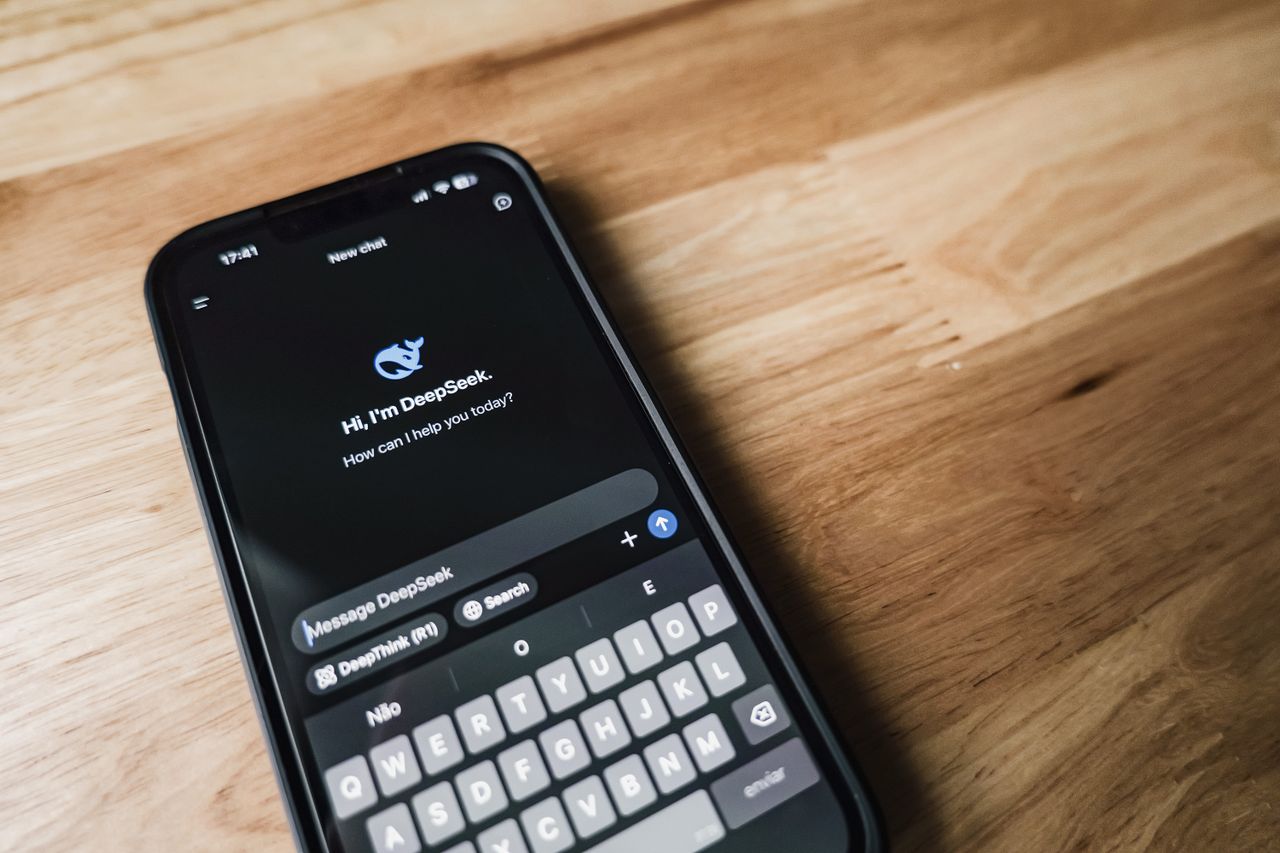
Start with the one surface you can see clearly: the deepseek.com chatbot. Unlike a model answering purely from static training data, DeepSeek’s app performs live web search and — with its DeepThink toggle — exposes the chain of thought it uses to get to an answer. As Trakkr’s 2026 analysis puts it, DeepSeek does not rank pages in advance; it searches the web live and picks winners on the spot, which means an optimised page can become eligible for citation within hours rather than the months traditional ranking takes.
BrightEdge’s teardown of DeepSeek’s reasoning trace found a distinctive “think-first” pattern: before retrieving, the model plans how to find the best answer, then actively cross-references sources and reconciles contradictions. Critically, it favours content that builds knowledge systematically — sources that establish a clear foundational definition, connect related concepts, bridge theory with practice, and acknowledge how things vary by context. It is rewarding comprehensiveness and internal logic, not keyword density. The signals that actually drive selection are below.
| Signal DeepSeek selects for | What the 2026 evidence shows | Your tactic |
| Credibility markers | Favours established domains, expert authors, recent publication dates and clean technical implementation; news, academic and industry sources cited most. | Add author bios with real credentials; surface visible publication and “last updated” dates. |
| Knowledge-framework depth | Prefers sources that define foundations, then connect concepts and apply them — not bare feature lists. | Build topic hubs that define → connect → apply, with internal links between related pages. |
| Speed and availability | Real-time scanning favours pages that load fast; slow pages get skipped mid-search. | Fix Core Web Vitals, use a CDN, keep priority pages reliably available. |
| Extractable structure | Rewards FAQ, how-to and problem-solution formats with clear headings. | Use direct question headings; keep sections tight (roughly 120–180 words). |
| Freshness | Strong recency bias across AI crawlers; recently updated content is markedly more likely to be cited. | Run a refresh cadence; update stats and dates on a schedule. |
| Schema markup | Structured data is associated with a citation lift of around 30% across engines. | Mark up articles, FAQs and how-tos with appropriate schema. |
The cross-engine read: most of these are universal answer-engine signals — across roughly 680 million citations analysed by Profound, .com domains took over 80% of citations and freshness consistently mattered. DeepSeek’s own twist is the think-first, knowledge-framework preference, which rewards genuinely comprehensive resources over thin, transactional pages. If you have built proper topical hubs — the architecture we cover in our
guide to link building strategies — you are already most of the way there for the retrieval layer.
The Three-Layer Open-Model Citation Map
Optimising the chatbot is necessary but nowhere near sufficient, because the chatbot is one surface of three. To brief a client or a team without hand-waving, use the Three-Layer Open-Model Citation Map — a framework that separates the surfaces an open-weight model exposes, tells you whether you can move each one, and on what time horizon. The whole point is to stop treating “get cited by DeepSeek” as a single task and start spending where the leverage actually is.
| Layer | What it is | Can you move it? | Time horizon |
| Memory | What the weights “know” without retrieval — baked in at training time. | Indirectly and slowly; you must be in the corpus before the next training run. | Model generations (6–12 months) |
| Retrieval | Live web search by DeepSeek’s chat and by downstream RAG systems. | Yes — directly and fast. | Hours to days |
| Fan-out | The many products that embed the open weights and wire their own retrieval. | Partially — via the two layers above, amplified by permissive licensing. | Continuous and fragmented |
Score your brand 0–2 on each layer for your five priority queries (absent / partial / strong), and the gaps tell you where to spend. Most brands obsess over a layer they cannot move quickly (Memory) while neglecting the one they can (Retrieval). The three sections that follow work each layer in turn.
Layer 1 — Memory: getting into the training corpus
When DeepSeek answers without searching, it draws on what its weights absorbed during training — 14.8 trillion tokens for V3, and over 32 trillion for the V4 series. If your brand and its key facts were well represented in the broad, public web at training time, the model “knows” you; if not, no downstream deployer can patch that in. This is the slowest, least controllable layer, and the one most people waste effort chasing directly.
You cannot edit a trained model, but you can shape what the next generation ingests. The lever is the same one that has always built durable authority: broad, authoritative, frequently-republished presence on the open web — the kind of coverage that gets quoted, syndicated and referenced enough to appear many times in a crawl. Wikipedia-grade reference depth, consistent presence on high-authority domains, and being the named source others cite all raise the odds your facts survive into the weights. This is what link building is for at its most fundamental: earned, distributed citation is how a brand becomes part of the corpus rather than a footnote.
A cautionary note on how corpora propagate: open-weight models are routinely distilled and fine-tuned from one another, so errors and gaps replicate. In February 2026 Anthropic publicly accused DeepSeek of using thousands of fraudulent accounts to generate millions of Claude conversations to train its own models — a vivid reminder that what one model “knows” can flow into the next. The practical implication for a brand: a clean, consistent, widely-repeated description of who you are and what you do is the version most likely to propagate. An inconsistent or thinly-covered brand propagates as noise, or not at all.
How to test what the weights already know about you
There is a quick, free diagnostic for the Memory layer: turn web search off and ask. In DeepSeek (or any open model running without retrieval), pose plain questions about your brand and category — “What does [brand] do?”, “Who are the main providers of [category]?” — and read what comes back from the weights alone. If the model describes you accurately and names you among the category leaders, you are in the corpus. If it invents details, omits you, or confuses you with a competitor, the weights do not know you, and only earned, distributed open-web authority over the coming months will change that before the next generation trains. Run this quarterly; it is the cheapest leading indicator you have for a layer that is otherwise opaque.
Layer 2 — Retrieval: winning the live search
This is the layer you can actually move this week, and it is where the chatbot signals from earlier do their work. When DeepSeek (or a downstream app using its weights with web access) decides current information is needed, it scans live, evaluates candidates on credibility and structure, and cites the winners. Everything that makes a page easy to fetch, fast to load, simple to parse and obviously trustworthy raises your odds — within hours of the crawler finding it.
One nuance separates the app from the fan-out on this layer. When DeepSeek’s own chat retrieves, it pulls from the open web, so your public pages are in play. When a downstream deployer wires the weights into a private RAG system, the model retrieves from that company’s chosen corpus — which may be their own docs, a licensed dataset, or a curated slice of the web. You cannot reach into a private corpus. What you can do is be the obvious public source a deployer includes when they build a web-grounded product, and be authoritative enough that licensed datasets and aggregators carry your facts. In other words, winning the open web is still the highest-leverage move, because it is the corpus most deployers default to.
- Be crawlable and fast. The page must be reachable and load quickly during a live scan; a slow or flaky page is dropped mid-search. Treat Core Web Vitals and uptime as citation prerequisites, not nice-to-haves.
- Lead with the answer, then build the framework. Open with the definitive answer, then deliver the define → connect → apply depth DeepSeek’s think-first process rewards. Comprehensiveness wins here in a way it does not on recency-only engines.
- Mark up credibility. Named expert authors with credentials, visible dates, and clean schema are the signals the model reads as trust. Anonymous, undated pages start at a disadvantage.
- Structure for extraction. Question-shaped headings, FAQ and how-to formats, and tight sections (~120–180 words) give the model clean, liftable units.
- Refresh on a cadence. Recency bias is real across AI crawlers; a visible “last updated” line and a scheduled refresh keep priority pages in the candidate set.
One operational lever specific to AI retrieval is an llms.txt file — a simple markdown map at your site root that points AI crawlers at your highest-value pages. It is illustrative, not magic, but it is cheap to ship:
| # llms.txt — served at https://yourdomain.co.uk/llms.txt # Points AI crawlers at your canonical, citable pages # Your Brand — [one-line description of what you do] ## Core references – [What X is](/what-x-is): foundational definition + context – [How X works](/how-x-works): mechanism, step by step – [X vs Y](/x-vs-y): comparison with the main alternative ## Data – [X statistics 2026](/x-statistics): primary-sourced figures |
Where this breaks in production: llms.txt is a proposed convention, not an enforced standard — there is no guarantee any given model or deployer reads it, and it does nothing for the Memory or Fan-out layers. Treat it as a low-cost nudge to the retrieval layer, never as a substitute for crawlable, fast, authoritative pages. If a crawler ignores the file, your underlying page structure still has to win on its own.
If you do nothing else on this layer, fix the order of operations. Speed and crawlability come first, because a page the model cannot fetch or will not wait for is never even a candidate. Credibility markers come second, because they decide whether a fetched page is trusted. Structure and freshness come third, because they decide whether a trusted page is easy to lift and current enough to prefer. Brands routinely invert this — polishing structure on a page that loads in four seconds and carries no author or date. Win the prerequisites before you optimise the refinements.
Layer 3 — Fan-out: the invisible deployment surface
This is the layer competitors pretend does not exist, and it is the reason the 0.37% figure misleads. Because DeepSeek’s weights are open and permissively licensed, they run inside an enormous, growing set of products you cannot enumerate: enterprise RAG systems, on-prem chatbots in regulated industries, edge and on-device assistants, coding tools, and consumer apps that quietly swap in whichever open model is cheapest this month. Each deployer wires its own retrieval and its own data, so “being cited by DeepSeek” fragments into thousands of independent decisions.
You cannot optimise each one individually, and you should not try. The leverage is indirect: strengthen the Memory and Retrieval layers, and you raise your odds across the entire fan-out at once, because most deployers inherit the same model behaviours and pull from the same open web. Two structural factors deserve specific attention.
Licensing diversity works in your favour
The more permissive the licence, the more varied the downstream products, and the broader the surface your authority can appear on. DeepSeek’s MIT terms (zero downstream obligations) and Apache-licensed peers like Qwen seed a wider ecosystem than restrictively-licensed models. You do not control this, but it means a single strong open-web presence compounds further than it would in a closed-model world. Build once, surface in many places.
On-device models are a separate surface with separate rules
A growing slice of the fan-out runs on the device itself. Small models — Gemma, Phi and compact Llama and Qwen variants — increasingly power on-device assistants that answer without a server round-trip, and therefore often without live retrieval at all. On that surface the Memory layer dominates almost entirely: if the model did not learn your brand at training time, no on-device app can fetch it. This is exactly where canonical-knowledge presence — being the clean, widely-repeated, reference-grade version of your facts — pays off, and where thin or inconsistent coverage simply vanishes. As edge AI grows, expect this no-retrieval surface to reward durable authority over freshness, the inverse of the chatbot.
Cross-language is a structural gap — and opportunity
Chinese-origin open models — DeepSeek, Qwen, Kimi, GLM — collectively dominate Chinese-language AI deployments, and DeepSeek’s download base skews heavily to China, with India a strong second on iOS. A brand with only English content carries a compounding visibility gap in those deployments. For UK businesses with any Asian exposure, this is where international link building and dedicated strategies for India and South Asia stop being optional. The fan-out is multilingual; English-only authority is a self-imposed ceiling.
The reliability and brand-safety problem
Two risks specific to this landscape deserve pricing into any plan. The first is attribution reliability. The Nieman Journalism Lab found DeepSeek exhibits a “copycat citation” problem — a tendency to cite less-reputable sites, including outlets that have plagiarised established reporting, rather than the original publisher. If your authoritative page is the original and a scraper copy gets cited instead, you carry the cost. The defence is the same discipline that wins citations: be unmistakably the canonical, best-structured, most-credible version of the claim, so the model has the clearest possible reason to pick you over a copy.
The second risk is access. Several governments have restricted DeepSeek — Italy pulled it from app stores over a privacy probe, Australia and Taiwan barred it from government use, South Korea restricted it across ministries, and a string of US bodies including Congress, the Navy, the Pentagon and NASA blocked it. For a UK brand selling into the public sector, defence, or regulated enterprise, a meaningful slice of your audience simply cannot use DeepSeek’s app. That does not make the model irrelevant — the open weights still run elsewhere — but it should temper how much you weight the app surface specifically, and it is a genuine consideration for any AI search visibility programme aimed at enterprise buyers.
There is a quieter third consideration that sits between the two: data residency. Part of why open weights spread so fast is that organisations in regulated sectors — healthcare, finance, defence — can self-host them on their own infrastructure, so the data never leaves the building. That is a tailwind for the fan-out (more private deployments, more surfaces) but it also means the version of DeepSeek your enterprise buyer actually uses may be a self-hosted instance with a curated corpus, not the public app at all. It reinforces the same conclusion from a different direction: the public app is the least representative surface, and durable open-web authority is what carries you into the self-hosted deployments you will never get to inspect.
Measuring what you can (and accepting what you cannot)
You can measure the app surface directly and the fan-out only by proxy. Run a deliberate loop on what is visible, and treat the rest as a probability you influence rather than a number you track.
- Build a query set. List the 15–20 questions a buyer asks before choosing in your category. These are the prompts you will test repeatedly.
- Test the app with search on. Run each query in DeepSeek with web search active, log whether your brand or pages appear, and verify the citation actually supports the claim — given the copycat problem, a wrong citation is a liability, not a win.
- Use a multi-engine tracker for coverage. Platforms such as Semrush’s enterprise visibility toolkit and dedicated trackers like Peec AI or Profound now cover DeepSeek alongside the majors, surfacing URL-level citation gaps — domains competitors are cited from and you are not.
- Proxy the fan-out. You cannot see every downstream app, but you can watch for DeepSeek referral traffic, set alerts for your domain alongside “DeepSeek,” and treat strong performance across other open-weight surfaces as a leading indicator for the fan-out you cannot see.
- Re-test on a cadence. The open-weight landscape shifts within a quarter and new releases land every few weeks, so monthly re-testing is the realistic floor.
Set expectations accordingly. On the app surface you can chase a measurable citation share; on the fan-out you are managing a trend, not a target. A healthy programme reports two things side by side — a hard citation-share number for DeepSeek’s app and the major open-model trackers, and a softer “are we strengthening across open-weight surfaces generally” narrative backed by the same authority signals (earned coverage, knowledge-graph consistency, multilingual reach). A board that understands the measurability inversion will accept the second as legitimate; a board that does not will keep demanding a single number that the architecture cannot give them.
Tooling is the instrument, not the strategy — our round-up of link building and visibility tools covers the monitoring layer; the strategy is the three-layer map.
Composite case study: a fintech that was “invisible on DeepSeek”
The situation. A UK B2B fintech — call it a payments-infrastructure provider — was told by its board to “fix DeepSeek visibility” after a competitor appeared in DeepSeek answers and it did not. The instinct was to chase the model directly. The Three-Layer Map reframed the problem. (Composite drawn from common 2026 patterns; figures illustrative.)
The map read. Memory: 1/2 — the brand had thin, inconsistent open-web coverage, so the weights barely “knew” it. Retrieval: 1/2 — good content existed, but priority pages were slow, undated and anonymous, and lacked schema. Fan-out: 0/2 — English-only, despite a growing India customer base. The diagnosis was not “more DeepSeek optimisation”; it was two fixable layers and one strategic gap.
The intervention. No attempt to game the model. Instead: (1) the ten highest-value pages were given named expert authors with credentials, visible “last updated” dates, FAQ schema and a Core Web Vitals pass to clear the speed bar; (2) three thin explainers were rebuilt as proper define → connect → apply hubs with internal linking; (3) a digital-PR push earned coverage on authoritative industry and news domains — feeding both the Retrieval layer now and the Memory layer for the next model generation; (4) the core explainer pages were translated for the India market.
The result pattern. Because retrieval moves in hours, the page-level fixes showed up first — within a fortnight the brand was appearing in DeepSeek app answers for the majority of its category queries, where before it was absent. The earned-coverage and translation work is the slow compounding part: it widens presence across the fan-out and raises the odds the brand survives into the next training run. The lesson the board took away: “DeepSeek visibility” was never one project. It was authority work, structured correctly across three time horizons.
Five mistakes that keep brands invisible on open models
- Reading the 0.37% literally. Dismissing DeepSeek on app-referral share alone ignores the fan-out, which is where most open-weight reach actually lives.
- Chasing the layer you cannot move. Pouring effort into “getting into the training data” this quarter. Memory moves in generations; spend on Retrieval first.
- Treating it as one engine. Optimising for the chatbot and assuming the fan-out follows automatically. It mostly does — but only because you strengthened the underlying layers, not the app.
- Ignoring speed and credibility markers. Slow, anonymous, undated pages get skipped mid-scan. These are prerequisites, not refinements.
- Staying English-only. The open-model fan-out is heavily multilingual and Chinese-origin models dominate Asian deployments. English-only authority caps your visibility by design.
The through-line: open-weight visibility is authority work distributed across three time horizons — not a model you can trick. Get the layers right and the fan-out takes care of itself.
Your Monday-morning DeepSeek action plan
- Run the Three-Layer Map on five queries. Score Memory, Retrieval and Fan-out for your five highest-value buyer questions. The lowest scores are your roadmap.
- Clear the retrieval prerequisites. On your top ten pages, add named expert authors, visible “last updated” dates, and run a Core Web Vitals pass. This is the fastest-moving layer.
- Add schema and structure. Mark up articles, FAQs and how-tos; tighten sections to ~120–180 words with question-shaped headings.
- Ship an llms.txt. Map your canonical, citable pages. Low cost, possible upside, no downside.
- Brief one earned-coverage push. Target authoritative industry and news domains — it feeds Retrieval now and Memory for the next model.
- Decide your language strategy. If you have any Asian exposure, scope translation of your core explainer pages. Diarise a monthly re-test of the five queries.
The bottom line
DeepSeek is not a smaller ChatGPT you can safely ignore on traffic share. It is the clearest example of a structural shift: open-weight models do not present one surface to optimise, they present a landscape — a training corpus you influence slowly, a live retrieval layer you move in hours, and a sprawling, invisible fan-out you reach only by getting the first two right. The same shift is playing out across Qwen, Llama, Mistral, GLM and Kimi, which is why the discipline here is a landscape strategy, not an engine tactic. The brands that win stop asking “how do we rank in DeepSeek” and start asking “which layer are we weakest on, and on what time horizon does it move.”
The strategic window is open precisely because the misleading headline number tells most competitors to look away. Run the Three-Layer Open-Model Citation Map, fix the retrieval layer this week, feed the memory layer with earned authority all quarter, and let the permissive-licence fan-out carry that work into places you will never see on a dashboard. On a landscape that reshapes itself every few weeks, the brands that map it deliberately are the ones that get named.