









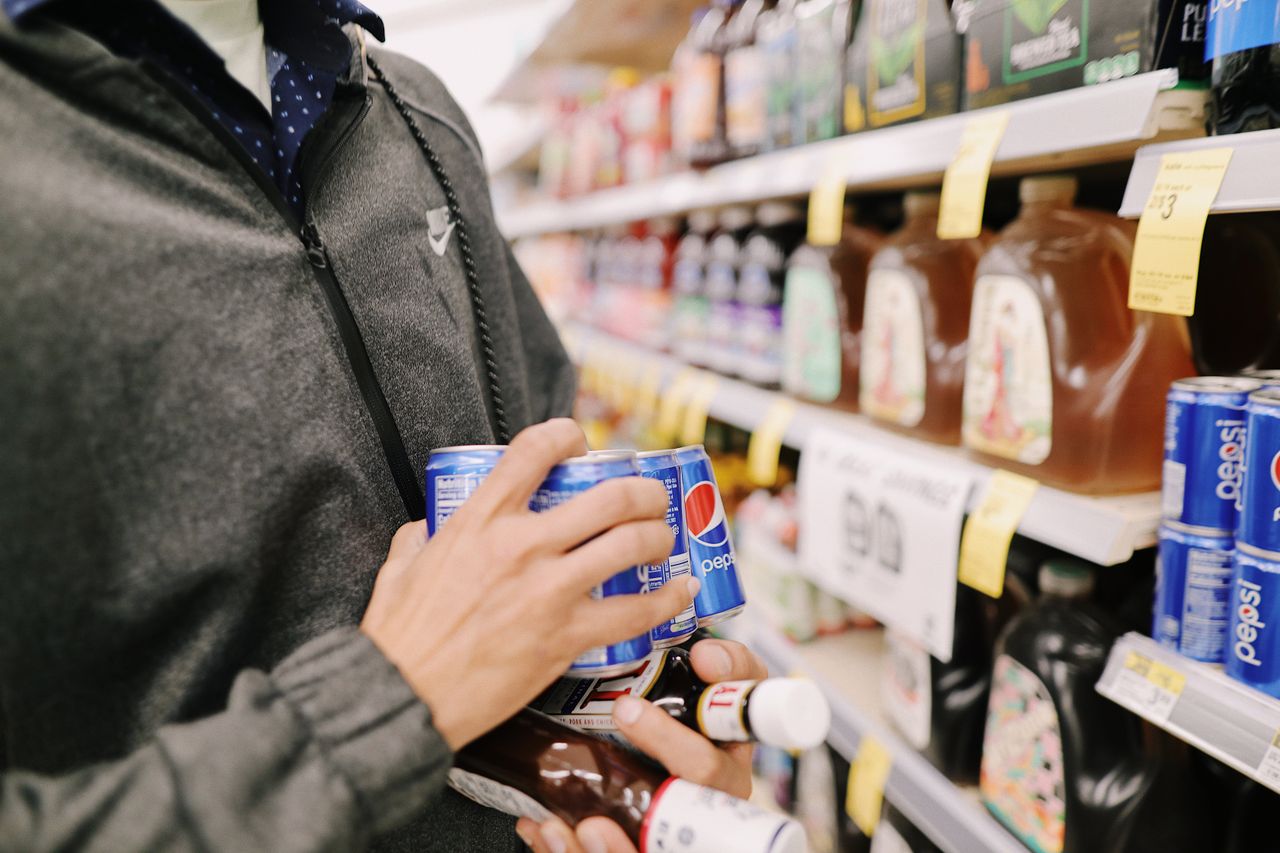
| TL;DR One fact reshapes everything about CPG link building: the brand does not own the point of purchase. A shopper discovers your product through a creator on Tuesday and buys it at Tesco or on Amazon on Friday without ever touching a link you control. So link building here is not about ranking a converting product page — it is about building the brand demand, entity authority and category recommendation that travel across the retail gap. A second fact reshapes it again for UK food and drink: since 5 January 2026, paid online advertising of ‘less healthy’ (HFSS) products is banned — and that includes gifted and affiliate creator posts. The paid/gifted lane that powers fashion link building is, for HFSS products, now illegal. Which pushes the strategy onto exactly the ground link builders own: earned, owned and organic. The single most valuable owned asset in CPG is the recipe and usage hub. It is the one page type the brand can rank and own, it is intrinsically linkable to food media and creators, and it routes demand to whatever retailer stocks you. This playbook gives you an asset matrix that bakes the HFSS rule in, the recipe-hub strategy, data-led PR, the creator compliance fork, the full regulatory layer, and a 90-day plan. |
The one fact that changes everything
Most link-building advice quietly assumes you control the checkout — that the job is to rank a page that converts, and a link’s value is the ranking lift it gives that page. For consumer packaged goods, that assumption is simply false. As the CPG marketing literature puts it plainly, the brand does not own or control the point of purchase. Your product sits on a supermarket shelf, in an Amazon search result, in an Instacart basket. The consumer who falls for your brand on a creator’s recipe video clicks no link of yours before buying it three days later in a shop. The marketing — and the link building — has to work across a retail gap that direct-to-consumer brands never face.
Change that one assumption and the whole strategy reorganises. If you cannot rank a converting product page, then the authority you build is not in service of a checkout you own. It is in service of three things you can influence: demand (shoppers searching for and asking for your brand by name at the retailer), entity (search engines and AI assistants recognising your brand as a real, trusted thing in its category), and recommendation (being the brand that gets named in the ‘best of’ lists, the recipes, and increasingly the AI shopping answers). Links serve those three jobs, not a conversion rate.
Practically, this reframes what a ‘good link’ even is for a CPG brand. A link from a recipe site that sends a home cook to your product is worth more than a higher-authority link to a product page no one buys from directly, because the first one does a job in the world your brand actually has and the second one optimises a checkout you do not control. The brands that struggle are the ones that hired a DTC-trained SEO, pointed them at the product catalogue, and wondered why the rankings never converted — the catalogue was never the asset. The demand was.
This matters more every quarter because of where discovery is going. As our analysis of how agentic browsing changes what a click is worth sets out, AI shopping agents and answer engines lean heavily on ‘best of’ listicles and corroborated brand mentions to decide which products to surface — and they read facts and citations, not a brand’s own adjectives. For a CPG brand that never owned the checkout anyway, that is not a threat; it is the same game it was always playing, now with higher stakes. The brand that is the cited, recommended name wins the basket regardless of where the basket lives.
The second fact: the HFSS ban has redrawn the UK map
If you sell food or drink in the UK, a regulatory change has rewritten your options. Since 5 January 2026, under rules made through the Health and Care Act 2022, paid-for online advertising of ‘less healthy’ food and drink (products high in fat, salt or sugar — HFSS — under the Government’s nutrient profiling model) is banned at all times, alongside a 9pm TV watershed. The ASA is already enforcing it, and has confirmed that even a single identifiable less-healthy product in a paid ad is enough to constitute a breach.
Here is why this is a link-building story and not just a media-buying one. The ban targets paid promotion — and the regulator’s definition of ‘paid’ is wide. Per the official guidance summarised by the IAB and ASA, a creator post counts as a paid online ad if the creator received payment, a gifted product, or an affiliate commission. So the gifting-and-affiliate engine that powers link building in fashion and most other consumer categories is, for an HFSS product, now a statutory breach. The lane is closed.
| What the ban leaves wide open The crucial detail for link builders: there are no restrictions on owned media or organic content. A brand’s own website, its recipes, its organic social posts, and genuinely earned (unpaid) editorial coverage are all outside the ban. So is brand advertising — promoting the brand’s identity and values without featuring an identifiable less-healthy product — which the Government explicitly carved out as an exemption. And reformulated, NPM-passing ‘healthier’ versions can be promoted normally. Read that against the channel list and the conclusion is striking: the HFSS ban pushes food and drink brands off paid/gifted promotion and onto earned, owned and organic link building — the exact channels this publication is about. For HFSS brands, great link building is no longer just the better path. It is the compliant one. |
Two exemptions deserve a closer look because each opens a real lane. The brand-advertising carve-out means an HFSS maker can still build campaigns and earn coverage around its identity, story, heritage and values — as long as no identifiable less-healthy product is the subject. That is a narrower path than it sounds (the rules police what such ads can include), but it is enough to support founder PR, purpose campaigns and brand-led data stories. The reformulation lane is more decisive still: a recipe or range reworked to pass the nutrient profiling model can be promoted by every channel the ban closes, which is why ‘healthier’ line extensions are quietly becoming a marketing strategy as much as a product one. For link builders, both lanes point the same way — toward content about the brand and the better-for-you range, and away from paid placement of the core indulgent SKU.
This lands at a moment when the category is already being squeezed. Industry forecasts put 2026 food and beverage growth in the low single digits, driven by price rather than volume — people are not eating more, they are eating differently, paying premiums for health, transparency and functional benefits while hitting an affordability ceiling. Add the ad ban on top, and the brands that lean on cheap paid reach are squeezed from both sides. The ones that invest in owned assets and earned authority are buying something the ban cannot take away and a price war cannot erode.
The deliverable: the CPG Link Asset Matrix
Before you brief anything, do two things. First, classify the product: is it HFSS under the nutrient profiling model, or not? That single fork decides whether the paid/gifted/affiliate lane is open to you in the UK. Second, score each candidate asset against what it actually does for a brand that does not own the checkout. The matrix below does both at once — run every proposed asset through it before a penny is committed.
| Asset | What it does for you | HFSS / claims flag | Verdict |
| Recipe & usage hub | Owns a rankable page; routes demand to any retailer; earns food-media & creator links; feeds AI answers. | Owned/organic — outside the ad ban. Safe. | Build first |
| Consumer-survey / food-trend data study | Builds brand & entity authority; earns national and trade-press links; quotable for years. | Brand-led data is safe; don’t headline a specific HFSS product. | Build first |
| Founder, origin & provenance story | Builds entity and trust; earns founder, regional and trade coverage. | Brand-led — safe even for HFSS makers. | Build |
| Functional / health-positioned content | Owns rankable pages; strong demand pull for benefit-led buyers. | Health/nutrition claims must be authorised & substantiated. | Build with review |
| Paid / gifted / affiliate creator post | Drives grocery demand fast; mostly nofollow links. | If product is HFSS: BANNED in UK paid media. | Refuse if HFSS |
| ‘Best of’ commerce roundup placement | High-authority, commercial-context links; feeds AI shortlists. | Earned editorial fine; a paid HFSS placement is an ad. | Build (earn it) |
The rule that does the most work: for an HFSS product, treat ‘can we pay or gift our way to this link?’ as a compliance question, not a budget one. If the answer involves payment, a gift or an affiliate commission attached to an identifiable less-healthy product, it is off the table in the UK — and the only routes left are owned, organic and genuinely earned. For non-HFSS brands the full toolkit is open, but the health-claims rules still gate anything functional. Either way, the highest-scoring asset is almost always the same one, so start there.
A worked example
A challenger crisp brand (clearly HFSS) and a no-added-sugar functional drinks brand (not HFSS) both want links. For the crisp brand, the gifting-to-creator play that a snack brand would have run in 2024 is now a breach, so the matrix routes its budget to an owned recipe-and-pairing hub, a ‘state of the British snack’ consumer-survey study, and brand-led founder PR — all earned and owned, all compliant, all link-rich. For the drinks brand, the paid creator lane is open, but its functional ‘focus’ and ‘gut health’ claims must be authorised and substantiated before they appear anywhere, so its functional content ships only after review. Same matrix, two completely different routes — decided in ten minutes, before any money moves.
Notice what the matrix protects against in each case. It stops the crisp brand from spending a budget that would have been wasted (and unlawful) on creator gifting, and redirects it to assets that compound. And it stops the drinks brand from rushing functional claims to market before they are cleared, which would have traded a short-term link for a long-term liability. The matrix is not really a content planner; it is a way of refusing the expensive mistakes before they are made, which in this vertical are mistakes of both budget and law.
The recipe and usage hub: CPG’s killer owned asset
If there is one thing a food or beverage brand should build before anything else, it is a genuinely useful recipe and usage hub. It is the rare asset that does all three CPG jobs at once. It is rankable — unlike a thin product page competing with the retailers who outrank you, a recipe page targets queries you can actually own. It is linkable — food bloggers, recipe aggregators, meal-planning sites and lifestyle media link to and adapt good recipes as a matter of course. And it routes demand: a recipe that calls for your product sends the reader to buy it wherever they shop, closing the retail gap without needing a checkout you own.
The format compounds because Google and the AI engines reward it. Recipe content with proper structured data wins rich results and the answer box, and the same structural discipline that wins a featured snippet — a clean, self-contained answer a machine can lift — is exactly what gets a recipe cited in AI Overviews and recommended by an AI cooking assistant. One 2026 industry analysis even found recipe video driving a large share of a new product’s online conversions. Build the hub as a topical cluster, not a single page, and earn links across the whole cluster; snippet and citation wins accumulate site-wide once Google trusts you on the subject.
Building it well is a discipline, not a content dump. The hub should target the queries your buyers actually cook around — ‘what to make with [your product]’, the dishes your category shows up in, the dietary and occasion variations (quick weeknight, batch-cook, festive) — with one genuinely tested recipe per page, proper recipe structured data, real photography, and clear, liftable method steps. Interlink the cluster tightly so authority flows across it, and give each recipe a reason to be linked: a technique tip, a substitution table, a make-ahead note that a food writer would cite. The brands that win here treat the hub like a publisher would, not like a catalogue with recipes bolted on.
Crucially for UK food brands, the recipe hub sits entirely in owned media — it is untouched by the HFSS ad ban even if the product itself is less healthy. A chocolate brand cannot pay a creator to feature its bar, but it can publish the definitive brownie recipe that uses it, and earn every link and citation that recipe attracts. The regulation closed one door and left this one wide open.
Data and survey-led digital PR
After the recipe hub, the highest-leverage CPG link asset is original data — the same lesson that recurs in every data-rich vertical, and which our recruitment and HR-tech playbook shows driving an entire link profile from a single proprietary dataset. For food and drink the raw material is everywhere: consumption and search-trend data, consumer surveys (‘the nation’s favourite’ anything), seasonal eating patterns, price and shrinkflation tracking, the rise of low-and-no and functional categories. Built brand-led rather than product-led, these stories earn national and trade-press links, travel on social, and stay quotable for years — and because they promote a finding about the category rather than an identifiable HFSS product, they sidestep the ad ban entirely.
Food has an unusually rich seasonal calendar to hang this on — Veganuary, Dry January, the summer barbecue season, Christmas, Easter, back-to-school. Plan one recurring, dated study per major moment and you create a predictable link engine timed to when food desks are already writing the story. The discipline, borrowed from the best interactive assets, is to make sure the study’s headline output is a public number a journalist can quote, not just an internal sales figure — a public benchmark earns the citation; a private metric does not.
As with regional food coverage, one study re-cut many ways multiplies the return: a national ‘what Britain is eating’ survey becomes a regional story for every area you slice it by, a generational story for every age group, and a category story for every aisle — each landing with the desk that cares about that cut. The work is in the dataset and the methodology, built once; the link yield scales with how many honest, specific angles you can pull from it. That is the opposite of how most content scales, and it is why a single well-designed study can out-earn a quarter of one-off posts.
Earned media, the food press and the retailer layer
Food and drink has a deep, specific media ecosystem — national food and lifestyle desks, the trade press (The Grocer, Food Manufacture and the like), recipe and meal-kit publishers, and a long tail of food creators and substacks. Earned coverage here is unpaid, so it sits outside the HFSS ban and carries strong topical authority. The craft and regional end of the market has an extra lever: provenance. A regional distillery, a county cheesemaker or an artisan baker can earn the county-press and regional-data links that no national brand can, exactly the regional-press and local-data-cut playbook that works for local suppliers — ‘the Yorkshire foods topping baskets this Christmas’ lands in the Yorkshire press in a way a national release never will.
There is also a retailer-citation layer with no real equivalent outside CPG. Where you are stocked — the supermarket’s own site, Amazon, Ocado, the marketplace listings, the review platforms — is both a discovery surface and a trust signal, and increasingly a source the AI shopping engines read. Accurate, complete, well-reviewed listings are the CPG equivalent of a clean citation base: they will rarely pass classic link equity, but they corroborate the brand for the systems now choosing what to recommend. Treat the listing data as a first-class asset, not an afterthought left to the retail team. The brands that get this right keep a single source of truth for product data — name, imagery, claims, descriptions — and push it consistently to every retailer and marketplace, so the brand reads as one coherent entity wherever an engine encounters it rather than as a dozen slightly different versions of itself.
Amazon deserves singling out because for many CPG brands it is the real search engine. A shopper researching a category often searches Amazon directly, and Amazon’s own ranking runs on sales velocity, reviews and listing quality rather than backlinks. Link building does not touch Amazon’s algorithm directly — but the off-Amazon demand it builds (the branded searches, the recipe traffic, the editorial mentions) drives the external traffic and brand recognition that lift Amazon performance indirectly. Think of the owned-and-earned programme as the top of a funnel whose bottom sits on a retailer’s platform you will never log into. The two are connected even though no link passes between them.
Creators and the compliance fork
Creator marketing is now structural in CPG, not experimental — recipe creators on TikTok and Instagram drive the sensory familiarity and grocery-purchase intent no other channel produces as efficiently, and recipe-led creator content reliably out-performs product-only posts. For link and entity building, creators generate the brand mentions and corroboration that AI answer engines weight, even when the links themselves are nofollowed or live on platforms that pass no equity.
But this is exactly where the HFSS fork bites, and it is worth being precise. For a non-HFSS product, paid and gifted creator work is open and powerful. For an HFSS product in the UK, a paid, gifted or affiliate creator post featuring the identifiable product is a statutory breach — and the ASA looks at the wider relationship, treating a post as paid if the brand has paid that creator within the last year or later puts spend behind the ‘organic’ post. The compliant routes that remain for HFSS brands: genuinely organic, unpaid creator enthusiasm; brand-led creator content that never features the less-healthy product itself; and content built around a reformulated, NPM-passing line. The instinct to ‘just gift it to a few creators’ is precisely the instinct that now creates legal exposure.
The practical implication for an HFSS brand is to invert the usual creator playbook. Instead of paying creators to feature the product, invest in the owned recipe and content assets that creators and food writers cite voluntarily, and build the kind of genuinely interesting brand that earns unpaid mentions. It is slower and less controllable than a paid campaign — and it is the only creator-adjacent route that is both compliant and durable. The brands that resent the ban keep looking for loopholes; the brands that win treat it as a forcing function toward the earned authority that was always the stronger asset.
The full compliance layer
Two regimes govern what food and drink content can say, and both shape the link strategy.
The HFSS / less-healthy advertising rules
- What is banned: paid-for online ads (24/7, all ages) and pre-9pm TV ads featuring an identifiable HFSS product. ‘Paid’ includes payment, gifting and affiliate commissions to creators.
- What is exempt: owned media (your site, organic social), genuinely earned editorial, and brand advertising that does not feature an identifiable less-healthy product. Reformulated NPM-passing products can be promoted normally.
- Who is exempt: SMEs under 250 employees are currently outside the online ban — but remain subject to the long-standing CAP Code rules on HFSS and on advertising to under-16s.
- Enforcement: the ASA is enforcing now and has upheld complaints already; a single identifiable product is enough. Assume scrutiny, not grace.
Nutrition and health claims
Anything functional — ‘supports gut health’, ‘high in fibre’, ‘aids focus’ — falls under the GB nutrition and health claims regime, where only authorised claims may be made and every claim must be substantiated. This is the fast-growing edge of the category (functional nutrition and gut health are among the strongest 2026 demand drivers), which makes it the most tempting place to over-claim. An unauthorised or unsubstantiated health claim in a linkable asset is not a clever angle; it is an ASA complaint and a brand-trust risk waiting to surface. Get claims signed off before they ship, exactly as you would in any regulated vertical. And note the interaction with the ad ban: a functional positioning can lift a product out of the HFSS net only if it genuinely reformulates, never by wording alone — the nutrient profiling model reads composition, not marketing language, so the claim and the recipe have to agree.
Where this breaks in production
- Treating the brand site like a DTC store. Pouring link equity into product pages that will never out-rank the retailers stocking you, instead of into the recipe and content pages you can actually own, is the foundational CPG mistake.
- The HFSS gifting trap. Running the gifting-and-affiliate playbook that works in fashion on a less-healthy UK product. It is now a statutory breach, and the ASA is watching the creator layer specifically.
- Over-claiming on functional benefits. An unauthorised health claim pitched for coverage is a liability, not a tactic. If the claim is not authorised and substantiated, it does not ship.
- Duplicate retailer and manufacturer copy. Brands whose product descriptions are copied verbatim across every retailer share that text with everyone; the owned pages stay invisible. Write original content for what you control.
- Over-reliance on one retailer or one creator. A brand whose entire discovery runs through a single marketplace or a single viral creator inherits that channel’s risk. Diversify the earned-and-owned base the way you diversify stockists.
- Chasing impressions over velocity. A creator campaign can generate millions of impressions while retail velocity falls. Measure the thing that moves product, not the vanity number.
| Failure threshold and fallback If a CPG link programme is not producing links within 60–90 days, check you are not still treating the brand site like a DTC store — that is the usual root cause. The fallback never fails and is always compliant: build the recipe and usage hub, and publish one brand-led consumer-data study. Both are owned or earned, both sit outside the HFSS ban whatever your product, and both do the three jobs — demand, entity, recommendation — that a brand without its own checkout actually needs. |
Measuring the right thing
Because CPG link building serves demand rather than a checkout, the scoreboard has to change. Referring-domain count still matters, but on its own it hides the point. Track instead: the share of new links coming from food media, recipe and trade domains (versus low-quality filler); branded-search volume and direct traffic, the cleanest proxies for the demand and recognition you are building; your presence and review quality across the retailers and marketplaces that stock you; and — increasingly — whether AI answer and shopping engines name your brand when asked your category’s questions. The link work shows up in baskets and brand searches weeks before it shows up in a domain-rating chart, so report the leading indicators or you will conclude a working programme has failed.
The attribution honesty here matters as much as in any vertical. Because so much CPG link value is mention, recommendation and demand rather than a click your analytics can trace to a sale, a dashboard built only on referring domains and last-click conversions will systematically understate the programme and push the team back toward the cheap, countable tactics — the very ones the ad ban now forbids for HFSS products. Report demand and recognition proxies alongside the link count, and make sure whoever judges the budget understands that in a business without its own checkout, a rising branded-search line is the result, and the link graph is only the input. Get that framing agreed early, because the wrong scoreboard does not just mismeasure the work — it quietly steers the team back toward the tactics this vertical can least afford.
A 90-day plan
- Days 1–15 — Classify and set up. Determine whether each product is HFSS. Map which retailers and marketplaces stock you and audit those listings. Set up brand-mention and branded-search monitoring. Agree which lanes are open given your HFSS status.
- Days 16–40 — Build the owned core. Scope and launch the recipe and usage hub as a topical cluster with proper recipe schema. Rewrite any duplicated manufacturer copy on the pages you control so earned links land somewhere worthwhile.
- Days 41–65 — Build the data story. Produce one brand-led consumer-survey or trend study with a quotable public number, timed to the next seasonal food moment. Clear any functional claims through review before publishing.
- Days 66–90 — Earn and amplify. Pitch the data story to food and trade desks; pursue earned (unpaid) editorial and ‘best of’ inclusions; activate compliant creator relationships (organic or brand-led for HFSS). Set per-asset monitoring so each campaign’s links, mentions and branded-search lift are attributed.
Frequently asked questions
If shoppers buy at the supermarket, why build links to my site at all?
Because the links build the demand, recognition and recommendation that decide whether shoppers reach for your brand at that supermarket — and whether the ‘best of’ lists and AI shopping engines name you. You are not ranking a checkout; you are becoming the brand people already want before they get to the shelf. That is what link building does in a vertical where you do not own the point of sale.
Can a HFSS brand still do influencer marketing in the UK?
Not in the paid, gifted or affiliate form, if the post features the identifiable less-healthy product — that is now a statutory breach the ASA is actively enforcing. What remains: genuinely organic, unpaid coverage; brand-led creator content that does not feature the product; and content built around a reformulated, NPM-passing line. The safe assumption is that any commercial relationship with a creator turns a post into a regulated ad.
Does the HFSS ban matter if we sell outside the UK?
The specific rules are UK law, so a brand selling only elsewhere is not bound by them — but the direction of travel is not unique to Britain, and several markets are tightening food-marketing rules. More to the point, the strategy the ban forces — owned recipe content, brand-led data PR, earned editorial — is the stronger CPG link strategy everywhere, ban or no ban, because it is the one that works when you do not own the point of sale. Treat the UK rules as a preview, not an exception.
What is the single highest-leverage asset?
A genuinely useful recipe and usage hub. It is the one page type a CPG brand can rank and own, it earns links from food media and creators, it routes demand to whatever retailer stocks you, and — because it is owned media — it is compliant even for HFSS products. Build it as a cluster, not a single page.
Does any of this help with AI search and AI shopping?
Directly, and it may be the highest-stakes reason to do the work now. AI shopping agents and answer engines choose products from corroborated brand mentions, recipe and ‘best of’ citations, and structured listing data — the exact outputs of the earned-and-owned programme above. A CPG brand that is the cited, recommended name is already feeding the systems that increasingly decide what lands in the basket.
The bottom line
The brands that win this vertical have made peace with a fact the others keep fighting: you are not building links to sell from your site, because you do not sell from your site. You are building the reasons a shopper, a food editor, and now an AI assistant all reach for your name when the moment to choose arrives. Do that, and the sale takes care of itself wherever it happens.
CPG link building goes wrong when it borrows a playbook built for brands that own their checkout. You do not own yours — so stop pouring effort into product pages the retailers will always out-rank, and start building the demand, entity and recommendation that travel across the retail gap. Build the recipe and usage hub first; it is the one asset that is rankable, linkable and compliant all at once. Run brand-led data PR on the seasonal calendar. Earn editorial and retailer corroboration. And in the UK, treat the HFSS ban not as a constraint to resent but as a push onto the earned-and-owned ground where the best links live anyway. For the foundations underneath it all, the complete strategies guide, the statistics reference and the link building tools roundup are the references this playbook sits on top of.