









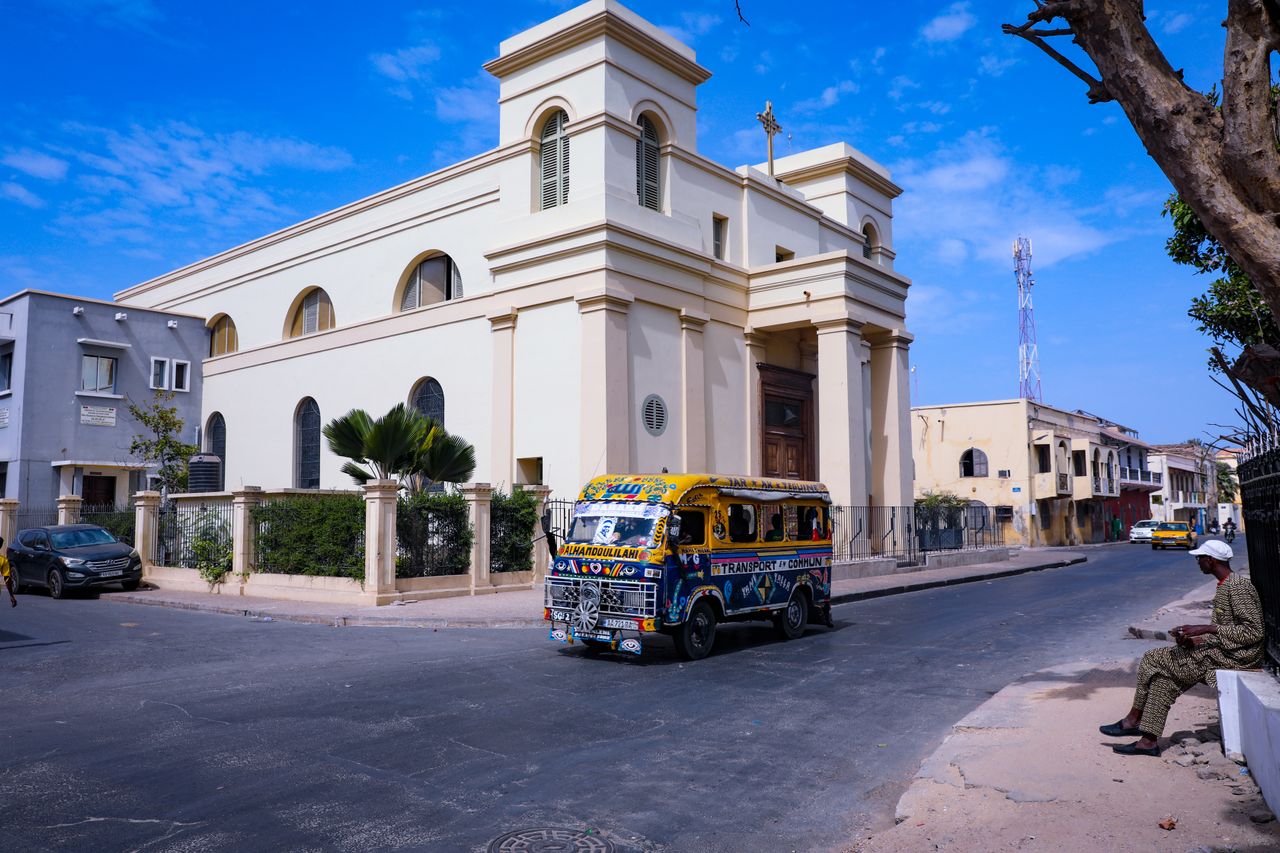
| TL;DR Francophone Africa is treated, in most English-language SEO literature, as a subset of “Africa.” That framing is a strategic error. French-speaking Africa is a distinct market with its own media architecture, its own payment rails and its own regional institutions — and it rewards a playbook built specifically for it. The central thesis: the shared French language is the strategic asset. It creates a pan-continental media layer that lets one well-made asset earn authority across many national markets at once — an advantage Anglophone Africa does not have in the same form.The framework: the Lingua Franca Framework and its three distribution tiers, with a market-prioritisation and asset-routing scorecard you can apply immediately.The operating reality: this is a mobile-money-first, relationship-driven region. Assets, angles and outreach must reflect that, not a card-based Western default.The distinction to hold: this is the French-speaking bloc. Our separate playbook covers Anglophone Africa — Nigeria, South Africa, Kenya and Egypt — which operates on entirely different media and institutions. |
Francophone Africa is among the most systematically overlooked opportunities in international link building. It comprises roughly two dozen countries across West, Central and North Africa — from Côte d’Ivoire and Senegal to Cameroon, the Democratic Republic of the Congo, and the Maghreb states of Morocco, Algeria and Tunisia — unified by French as the language of media, government and commerce. Taken together, they represent a large and rapidly digitising market that the English-language SEO industry has barely addressed on its own terms.
The neglect is not accidental. Most international link-building guidance is written in English, for English-language markets, and treats French-speaking Africa either as an afterthought or as an undifferentiated part of a single “African” strategy. Both approaches fail. Francophone Africa is not a translation exercise layered onto an Anglophone plan, and it is not interchangeable with the English-speaking markets that dominate the existing coverage.
This guide is written for the operator who intends to take the region seriously. It assumes familiarity with the fundamentals; readers who need grounding should first consult our overview of what link building is and the core strategies that underpin modern campaigns. The material below builds on that foundation rather than restating it, and concentrates on what is genuinely different about French-speaking Africa.
The scale of the opportunity is easy to underestimate. Africa’s internet population has grown from under 200 million a little over a decade ago to well past 600 million, and the francophone bloc — spanning some of the continent’s most commercially dynamic economies — is a substantial and fast-growing share of that total. Yet a search for a serious, current link-building resource for Côte d’Ivoire, Senegal or Cameroon returns almost nothing of substance. The combination of a large, digitising market and near-absent specialist guidance is exactly the condition under which early, serious operators establish durable advantage.
It should also be read alongside its sibling. Our Anglophone Africa playbook — covering Nigeria, South Africa, Kenya and Egypt — addresses the English-speaking markets, which run on different publishers, different regional institutions and, frequently, different mobile-money ecosystems. The two regions share a continent and little else operationally. This guide covers the French-speaking bloc, and the distinctions matter at every level of campaign design.
Why Francophone Africa is a distinct market, not a subset of “Africa”
Four structural facts separate French-speaking Africa from the Anglophone markets and from Western playbooks alike. Each has direct consequences for how authority is built.
1. A shared language creates a shared media layer
French functions as a genuine lingua franca across the region’s media and business elite. The practical consequence for link building is profound: a body of high-authority, pan-African French-language publications serves the entire bloc from a handful of editorial centres. Titles such as Jeune Afrique, RFI, The Africa Report and the francophone technology press cover Abidjan, Dakar, Yaoundé and Casablanca from the same newsrooms. A single French-language asset can therefore earn coverage that reaches readers across many national markets simultaneously — a structural advantage that fragmented, multilingual Anglophone Africa does not offer in the same way.
2. The economy is mobile-money-first, not card-first
Payment behaviour here is not a variation on the Western model; it is a different model. Across the West African economic and monetary union, bank-account penetration remains modest while mobile-money wallets are near-ubiquitous. The World Bank’s Global Findex 2025 indicates that around 40% of sub-Saharan African adults held a mobile-money account in 2024, and in francophone West Africa the wallet is now the default payment rail rather than one option among several. Any asset, data study or commercial narrative that assumes credit cards and traditional banking will read as foreign and irrelevant.
The competitive dynamics reinforce the point. A handful of operators — the historic telco-led services and a fast-growing app-first challenger that became the region’s first fintech unicorn — have driven wallet adoption into the tens of millions of active users, and the 2025 launch of instant, interoperable payments across the West African union has accelerated the shift further. For a brand building authority here, this is not merely a payments footnote: it dictates which data is interesting, which partnerships are credible, and which commercial narratives resonate. Content that engages seriously with the mobile-money economy speaks the market’s native commercial language; content that ignores it does not.
3. Regional blocs and a shared currency shape the market
Much of the region is organised into monetary and economic unions — the West African bloc (UEMOA) and the Central African bloc (CEMAC) — both using variants of the CFA franc, with shared central-bank regulation. In 2025 the West African central bank launched an interoperable instant-payment platform across the union, a genuinely significant structural change. For link builders, these institutions are not background detail: they define natural content territories, they generate their own specialised press, and they mean a market entry framed at the regional level often makes more sense than a country-by-country one.
4. A large, French-speaking diaspora extends the market abroad
Substantial francophone-African communities in France, Belgium, Quebec and elsewhere are served by their own French-language media and cultural institutions. These are high-relevance, often more accessible link surfaces that sit outside the domestic markets entirely, and they give brands with any genuine regional connection a credible reason to appear in French-language press abroad.
| The implication Shared language means shared distribution. Mobile-money-first means your assets must be built for that reality. Regional blocs mean you often plan at the union level, not the country level. Diaspora means your French-language surfaces extend well beyond the continent. None of these hold in the same form for Anglophone Africa — which is precisely why this region needs its own playbook. |
The Lingua Franca Framework: turning one language into continental authority
The framework that follows is built around the region’s defining feature: the shared language. Its logic is simple to state and demanding to execute — build once in native French, then distribute across three concentric tiers of authority, from the pan-continental down to the hyper-local. Getting the tiers right, and in the right order, is what separates a campaign that compounds from one that stalls.
The three tiers are the whole model:
| Tier | What lives here | Why it matters |
| Tier 1 — Pan-francophone media | Jeune Afrique, RFI, The Africa Report, the francophone tech and business press | One pitch, continental reach. The single highest-leverage surface in the region, with no Anglophone equivalent in the same concentrated form. |
| Tier 2 — National press & digital publishers | Country-level dailies, business titles and vertical sites in each target market | Where market-specific authority and local relevance are earned. Deeper trust signals for a given national audience. |
| Tier 3 — Mobile-first & local surfaces | Social platforms, creators, marketplaces, citations, mobile-money-adjacent ecosystems | Where discovery actually starts and where you establish that you are a real, present business rather than a foreign drive-by. |
The critical insight is directional. Western instinct is to start at Tier 1 with a cold pitch to the most prestigious outlet. In this region that fails. You build credibility from Tier 3 upward — local grounding first, then national relevance, then the pan-continental prize — while designing every asset so that a single build can be routed across all three tiers. The language is what makes that routing efficient; the sequencing is what makes it work. For the cross-border mechanics that sit underneath this — hreflang, ccTLD choices, equity flow — our international link building framework provides the technical layer this regional model sits on top of.
The market-prioritisation and asset-routing scorecard
A framework must resolve into decisions. The scorecard below does two jobs: it ranks candidate markets, and it tells you how to route a given asset across the three tiers. Score each target market from 1 to 5 on each axis, then apply the routing rule beneath.
| Axis | Score 1 (weak) → 5 (strong) | What it governs |
| Market size & maturity | Internet users × digital-economy depth × commercial value of your niche | Whether the market justifies dedicated Tier 2 work |
| Media earnability | 5 = deep, responsive national press; 1 = thin, few authoritative outlets | How much national-press effort will actually return |
| Language fit | 5 = French-dominant; 1 = French plus a strong second language (e.g. Arabic in the Maghreb) | Content cost and localisation complexity |
| Mobile-money centrality | 5 = wallet-first economy; 1 = more conventional banking mix | Which asset types and angles will resonate |
| Regional leverage | 5 = strong bloc membership and pan-media relevance; 1 = peripheral | Whether Tier 1 distribution will carry the asset |
Add the five scores. Markets scoring 18 or above warrant a full three-tier programme. Markets scoring 12–17 justify Tier 1 and Tier 3 investment with selective Tier 2 work in the most valuable verticals. Markets below 12 are opportunistic: take Tier 1 coverage where a regional asset naturally reaches them, but do not build a standalone national programme. The routing rule follows directly — every asset is built for Tier 1 distribution by default, because the marginal cost of pan-francophone reach is near zero once the French content exists, and only the highest-scoring markets earn bespoke Tier 2 assets on top.
Tier 1: the pan-francophone press is the region’s unfair advantage
The most important strategic fact about link building in French-speaking Africa is that a concentrated layer of high-authority, pan-continental French media exists and is genuinely earnable. Publications covering business, technology and current affairs across the whole francophone bloc are read by the region’s decision-makers and cited well beyond it. A brand that earns a place in that layer acquires authority signals that resonate across every national market at once.
What these outlets want is what national and pan-African journalists everywhere want, and rarely receive from international brands: credible, current, region-specific data and genuine expert commentary in fluent French. The francophone technology and business press in particular is hungry for original analysis of the digital economy — fintech, mobile money, e-commerce, the startup ecosystem — and covers it constantly. A well-constructed data study on, say, mobile-money adoption patterns or e-commerce growth in the UEMOA zone is precisely the kind of asset this layer will cite.
The evidence that this ecosystem is vibrant is not hard to find. The francophone fintech story alone has produced coverage-worthy developments throughout 2025 and into 2026 — the Senegalese payments company Wave became the first unicorn of francophone Africa, valued at around 1.7 billion dollars, and by 2024 was reported to have captured roughly 28% of transaction volume in the West African union, according to reporting in Jeune Afrique. A region generating stories of that magnitude is a region whose press is actively looking for data and expertise to contextualise them. That appetite is your opening.
The discipline Tier 1 demands is quality and language. A pan-francophone outlet will not run a clumsily translated pitch or a thinly-sourced claim. The bar is native-French fluency and primary-source rigour — the same sourcing standards you would apply to a placement in a serious Western business title. Clear that bar and the reward is authority that no single-market campaign can match.
Tier 2: national markets, and how they differ
Beneath the pan-continental layer, each national market has its own character, its own press depth and its own priorities. The following are the anchor markets, with the structural facts that should shape a Tier 2 approach in each. Treat the figures as calibration points, not fixed targets.
Morocco — the mature Maghreb anchor
Morocco is the most digitally developed market in the region and, by internet penetration, the most connected country in Africa. Online penetration reached roughly 92% at the end of 2025, with about 35.5 million internet users and 22.8 million social-media identities, according to the Digital 2026 Morocco report. It also over-indexes dramatically on AI adoption — industry survey data put ChatGPT use among Moroccan 16-to-24-year-olds at the highest level of any country measured, a signal worth noting for anyone thinking about AI-answer visibility alongside classic links. The complication is language: Morocco is bilingual, with Arabic alongside French, so content and outreach frequently need both. Score it high on maturity, moderate on language fit, and lead with fintech, tourism, and e-commerce angles.
Côte d’Ivoire — the francophone West African hub
Côte d’Ivoire is the commercial centre of francophone West Africa and the natural base for a regional programme. Internet penetration sat at around 41% at the end of 2025, with roughly 13.4 million users and 8.4 million social-media identities per the Digital 2026 Côte d’Ivoire report — a lower penetration rate than Morocco but a large, fast-growing and commercially dynamic base. Abidjan hosts a concentration of the region’s digital and media professionals, and it is where the mobile-money contest is most visible. This is a French-dominant, wallet-first market: score it high on language fit and mobile-money centrality, and build assets around fintech, commerce and the consumer economy.
Senegal — the fintech and innovation story
Senegal punches above its size in digital innovation and is, not coincidentally, the birthplace of the region’s standout fintech success. Dakar has a genuine startup and creator ecosystem and an engaged national press. For a brand with any technology, finance or innovation angle, Senegal offers a receptive audience and outlets that actively cover the digital economy. It pairs naturally with Côte d’Ivoire as the two pillars of a West African push, and the same French-dominant, mobile-money-first characteristics apply.
Cameroon and the DRC — large, complex, under-served
Cameroon (itself bilingual, with anglophone regions) and the Democratic Republic of the Congo are large markets with substantial populations and growing connectivity, but thinner and more complex media environments. They reward patience and local partnership rather than scaled outreach. Treat them as second-wave Tier 2 markets: worth genuine national assets once your regional programme is established, but not the place to begin.
Algeria and Tunisia — the other Maghreb markets
Algeria and Tunisia round out the North African francophone picture, and both share Morocco’s defining bilingual characteristic: French operates alongside Arabic across media and commerce. Algeria is a large market with a substantial connected population but a less developed digital-commerce environment and a more constrained media landscape, which makes national-press earnability harder to score highly. Tunisia is smaller but has an active technology and startup scene and a press that covers the digital economy with genuine interest. For both, the language-fit axis should be scored down to reflect the Arabic requirement, and the practical approach mirrors Morocco: bilingual content where the audience and outlet demand it, and angles built around the specific sectors — technology, tourism, commerce — where these markets are most active. As with the rest of the region, the pan-francophone Tier 1 layer reaches all three Maghreb markets at once, which is often the most efficient way to establish initial authority before committing to bespoke national assets.
The diaspora dimension
One further Tier 2 surface deserves explicit attention: the francophone-African diaspora press abroad. Large communities in France, Belgium and Quebec are served by French-language community outlets, cultural organisations and homeland-focused publications. These are frequently more accessible than the domestic national press, carry real relevance for the markets they serve, and give any brand with a genuine regional connection — heritage, sourcing, a founder’s roots, a market-entry narrative — a credible reason to appear. A single French-language asset can often be routed to diaspora outlets in parallel with domestic ones, adding another layer of reach at negligible marginal cost. It is the international extension of the same lingua-franca advantage that governs the whole framework.
Tier 3: mobile-first surfaces and local grounding
The foundation of any campaign in this region is Tier 3, and it is the tier Western operators most often skip. In a mobile-money-first, mobile-internet-first environment, discovery begins on social platforms and through creators, and credibility is established through local presence long before a national journalist will take a pitch seriously.
Three moves define effective Tier 3 work. First, accurate local citations and marketplace presence, so that the brand reads as a genuine, present participant in the market rather than a foreign entrant. Second, a credible social and creator footprint, because in these markets social is frequently where audiences discover brands and where journalists check whether a pitching brand is real. Third, mobile-money-native framing on everything commercial — assets, offers and narratives that assume the wallet, not the card, because that assumption signals genuine local understanding.
It is worth being specific about where discovery happens. In much of the region, social and messaging platforms are the primary gateway to the web, and a great deal of sharing occurs through closed channels rather than open link graphs. This has two implications. First, a substantial part of your real reach will be invisible to backlink tools, which makes creator and community seeding valuable in ways that standard metrics under-count. Second, the creators and community figures who drive that sharing are themselves a relationship layer worth cultivating deliberately — they are often the bridge between a brand’s Tier 3 grounding and the national journalists who populate Tier 2. Treating Tier 3 as mere table stakes, rather than as an active relationship-building surface, forfeits one of the region’s most useful dynamics.
This is also where the region’s relationship-driven character is most pronounced. Effective outreach here has more in common with the patient, relationship-first approach set out in our India and South Asia playbook than with high-volume Western outreach. A small number of genuine, sustained relationships with local publishers, creators and community figures will outperform any scaled cold-outreach programme, and those relationships are the ladder you climb from Tier 3 up to Tier 1.
Language and localisation discipline
Because the entire framework rests on the French language, the quality of that French is not a detail — it is the campaign. Three principles govern localisation in this region.
- Native French, never machine translation. Pan-francophone and national outlets alike will reject content that reads as translated. Commission native French writers who understand African French registers, which differ meaningfully from metropolitan French in vocabulary and idiom. This is a genuine content cost, and the scorecard treats it as such.
- Plan for the Maghreb’s bilingualism. In Morocco, Algeria and Tunisia, Arabic sits alongside French. Depending on audience and outlet, you may need Arabic-language content and outreach as well. Factor this into language-fit scoring and budget before entering these markets, rather than discovering it mid-campaign.
- Localise the substance, not just the words. Data should be about the region — UEMOA e-commerce, Ivorian mobile-money usage, Moroccan digital adoption — not a translated version of a UK study. Assets grounded in genuinely local, genuinely current data are what earn Tier 1 and Tier 2 links; translated generic content earns nothing.
For the platforms and tooling that support prospecting, outreach and monitoring across these markets — with the honest caveat that database coverage of francophone-African publishers is uneven — our best link building tools roundup covers what works for cross-border programmes and where the gaps are.
Measurement, and where this breaks in practice
Two cautions should temper expectations. First, tool coverage is materially incomplete. The major backlink databases index francophone-African publishers unevenly, and coverage of national and local outlets is often thin. Automated tools will under-report both your links and competitors’, so manual verification of the outlets you actually care about is not optional. A gap in the database is not the same as a gap in the market.
Second, impact patterns differ from saturated markets. Because these markets are less contested, links can take longer to show ranking movement, since the surrounding signal environment is quieter; but when movement arrives it tends to be larger per link, because there is less competition to displace. Measure over long windows — eighteen to twenty-four months — and judge each market against its own baseline rather than against Western benchmarks for cost-per-link, velocity or time-to-impact. Set client expectations at the outset accordingly: fewer, higher-quality placements and a longer runway to visible results, which is a more honest and more defensible promise than importing Western timelines that were never going to hold.
The characteristic failure mode is the one this guide exists to prevent: collapsing French-speaking Africa into a generic “Africa” or “emerging markets” strategy, running a single flattened plan across markets that differ in language, media depth and payment behaviour. If a campaign uses one asset, one language plan and one outreach template for the whole region, it has abandoned the framework’s core logic. The disciplined fallback when budget is constrained is not to go broad and shallow across every country, but to build one excellent French asset, distribute it hard through Tier 1, and establish real authority in the West African core before expanding.
A worked example: one asset across three tiers
To make the framework concrete, consider an anonymised composite — a realistic construction drawn from how these campaigns typically run rather than a single named client, so the figures are illustrative rather than reported.
A mid-market European e-commerce brand wants organic authority across francophone West Africa ahead of a regional launch. It has a modest budget and no local presence. Running its target markets through the scorecard, Côte d’Ivoire and Senegal score highest — French-dominant, wallet-first, media-earnable and strongly bloc-relevant — while Morocco scores well on maturity but lower on language fit because of Arabic. The scorecard says: build the West African core first, route everything through Tier 1, and reserve bespoke Tier 2 assets for the two anchor markets.
So the brand commissions a single, well-scoped asset: an original data study of e-commerce and mobile-money behaviour in the UEMOA zone, researched locally and written in native African French, with three or four genuinely quotable findings. That one asset is then routed deliberately across the tiers.
- Tier 1 distribution. The study is pitched to the pan-francophone business and technology press, led by its single most striking finding. Because the data covers the whole union rather than one country, a handful of placements here reach decision-makers across every target market at once.
- Tier 2 localisation. Country-specific cuts of the same data — the Ivorian figures, the Senegalese figures — are offered to national outlets in each anchor market, giving local journalists a locally-relevant angle they cannot get elsewhere.
- Tier 3 amplification. The findings are turned into shareable, mobile-first social assets and seeded through local creators and community figures, building the grounding that makes the Tier 1 and Tier 2 pitches credible in the first place.
One build, three tiers, one language. The economics work because the expensive components — the local research and the native French — are amortised across pan-continental, national and local returns simultaneously. That is the compounding the Lingua Franca Framework is designed to produce, and it is why a disciplined regional campaign can achieve continental reach on a budget that would buy only a handful of links in a saturated Western market.
A pre-entry checklist for any francophone market
Before committing budget to a new market in the region, an operator should be able to answer each of the following. The scorecard indicates where to spend; this checklist confirms readiness to spend well.
- Language plan confirmed. You have committed to native African-French content — not machine translation — and, for Maghreb markets, you have decided whether Arabic content and outreach are also required.
- Local data secured. Your primary asset is built on genuinely regional, genuinely current data rather than a translated version of a study designed for another market.
- Tier routing mapped. You know which pan-francophone outlets the asset targets at Tier 1, which national outlets receive localised cuts at Tier 2, and how Tier 3 will build the grounding beneath both.
- Mobile-money framing checked. Every commercial narrative, offer and call to action assumes the wallet rather than the card, reflecting how the market actually transacts.
- Local relationships in progress. You have begun building genuine relationships with local publishers, creators or partners — ideally with a credible in-region contact — rather than relying on cold outreach alone.
- Measurement baseline recorded. You have captured starting rankings and referring-domain data, and you have set an eighteen-to-twenty-four-month evaluation window judged on the market’s own baseline.
If any of these cannot be answered affirmatively, the market is not yet ready for committed investment. Entering before it is — particularly with translated content or a card-first commercial assumption — is the most reliable way to waste budget in the region.
Five mistakes that undermine francophone-Africa campaigns
Most failures in this region are quiet and avoidable, arising from imported assumptions that do not hold. Five recur often enough to name.
1. Treating the region as part of a single “Africa” strategy
The foundational error, and the reason for the entire framework. Francophone Africa differs from the Anglophone markets in language, media architecture, regional institutions and payment behaviour. A plan that flattens the continent into one strategy will misallocate budget and underperform across both blocs. If there is one plan for “Africa,” there is effectively no plan for either half of it.
2. Relying on translated rather than native content
Machine translation, and even non-native French, is transparent to the region’s editors and audiences. Because the whole framework depends on the credibility of the French, translated content does not merely underperform — it disqualifies a brand from the Tier 1 and Tier 2 surfaces that make the region worthwhile. Native African French is the entry requirement, not an enhancement.
3. Assuming a card-based, Western commercial model
Assets and offers that presuppose credit cards and conventional banking read as foreign in a wallet-first economy. The mobile-money reality must shape the substance of the content, not merely be acknowledged in passing. Getting this wrong signals a fundamental misunderstanding of how the market functions.
4. Starting at the top of the authority ladder
Cold-pitching the most prestigious pan-francophone outlet with no local grounding is the fastest route to being ignored. Authority in this region is earned from Tier 3 upward. The pan-continental prize at Tier 1 comes last, once local credibility and national relevance are established, not first.
5. Judging the region by Western timelines and benchmarks
Cost-per-link, velocity and time-to-impact figures from saturated Western markets do not transfer. These markets are quieter, slower to show movement and then more rewarding per link when they do. Importing Western benchmarks leads operators to abandon working campaigns prematurely, or to set client expectations that were never realistic. Each market must be judged on its own baseline.
Conclusion: a distinct market, open to those who treat it as one
Francophone Africa remains open because it is genuinely different and genuinely demanding, and most of the English-language SEO industry has been unwilling to meet it on its own terms. That reluctance is the opportunity. The region’s continental population is projected to keep growing rapidly — Africa’s internet user base, around 646 million recently, is forecast to pass one billion later this decade, according to industry data compiled by Statista — and the francophone bloc is a large and dynamic share of that growth.
The operators who succeed will be those who internalise the region’s distinctiveness rather than resisting it. Use the shared French language as leverage, not as a translation chore. Build assets for a mobile-money-first economy. Plan at the regional-bloc level where it makes sense, and earn authority from local grounding upward through the three tiers to the pan-francophone press. Commission genuine native French and genuinely local data. Do that, and a single well-made asset can build authority across an entire continent’s worth of markets at once — an efficiency that few other regions in the world can offer.
This guide is one instalment in an ongoing regional series. It is designed to be read alongside the Anglophone Africa playbook, the India and South Asia playbook, the Latin America guide, and the broader international link building framework — together, they support a genuinely global approach to authority building, one that treats each region as the distinct market it genuinely is rather than as a mere variation on an Anglocentric default.