









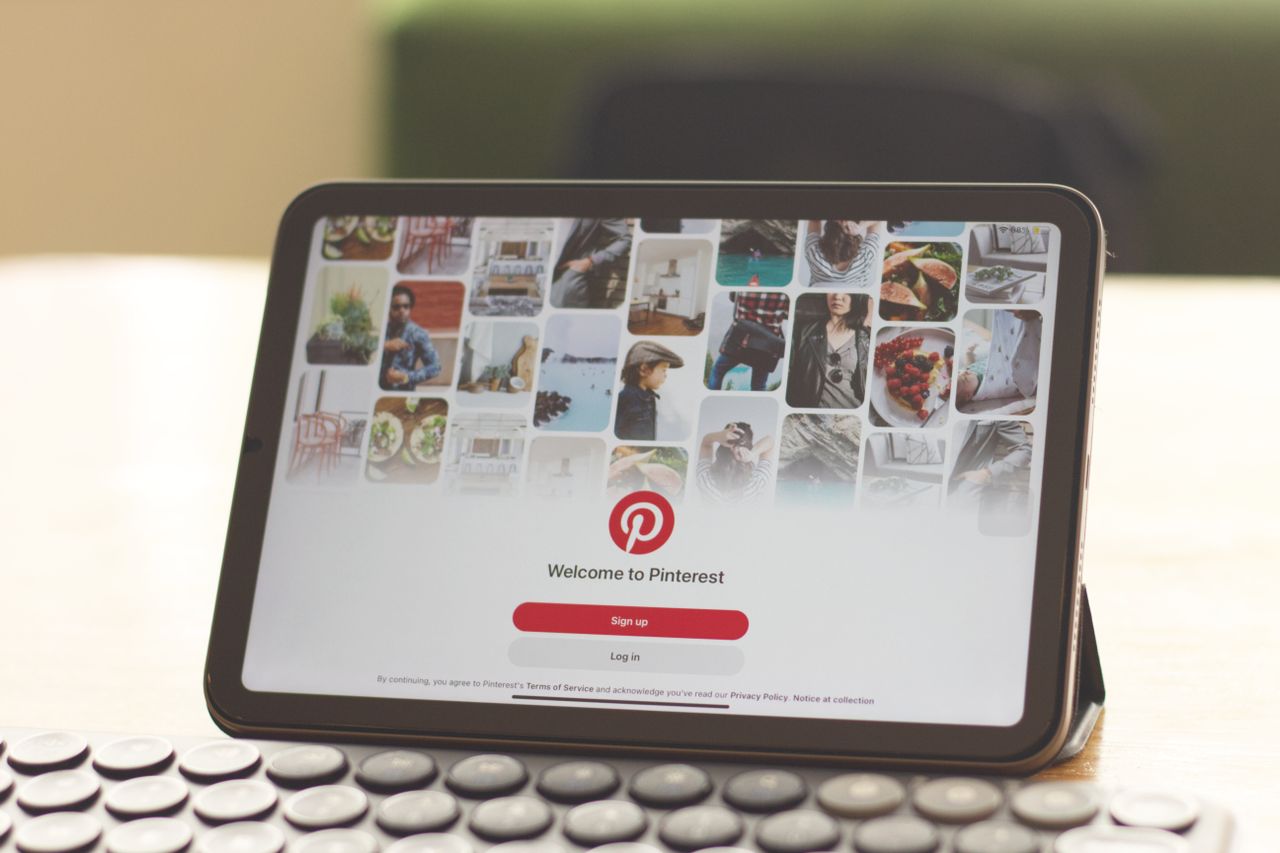
TL;DR Pinterest is the most underrated channel in link building, and the reason is a misunderstanding. SEOs see a social platform with nofollow links and move on. What Pinterest actually is — a visual search engine with 631 million users, five billion monthly searches, and pins that stay discoverable for months — makes it a uniquely durable discovery and link-influence channel.
The key difference from every feed-based platform: persistence. A tweet dies in 90 minutes; a TikTok scrolls away in a day. A pin keeps surfacing in search for months, quietly driving referral traffic, brand mentions and the branded searches that feed Google and the AI engines.
You will get: the 2026 data that reframes Pinterest, the honest truth about its nofollow links, the mechanism by which pins feed AI and Google, the ranking factors that get pins found, and a link-influence playbook that turns a free Pinterest account into a compounding visibility asset.
The deliverable: what a Pinterest pin actually gives you
Before the strategy, the honest accounting. A Pinterest pin does not give you a PageRank-passing backlink. It gives you five other things, and four of them matter more in 2026 than the link equity it withholds. Read this table and the checklist beneath it and you have the entire model; the rest of the guide explains why each line is true.
| [object Object] | [object Object] | [object Object] |
| [object Object] | [object Object] | [object Object] |
| [object Object] | [object Object] | [object Object] |
| [object Object] | [object Object] | [object Object] |
| [object Object] | [object Object] | [object Object] |
| [object Object] | [object Object] | [object Object] |
Here is the Monday-morning setup that captures all five. None of it costs anything but time:
- Claim your website in Pinterest settings. This establishes verified ownership, improves attribution, and is the closest thing to a trust relationship the platform offers.
- Enable Rich Pins. They sync structured data (price, availability, article metadata) from your site to your pins automatically, which strengthens both Pinterest ranking and the shopping signal.
- Pick 10 unbranded buyer queries. Use Pinterest’s search-suggest and Trends to find the “ideas” phrasing people actually search — “small kitchen storage ideas,” not “[your brand] shelving.”
- Create 3–5 fresh pin variations per query. Different images, each with keyword-rich titles, descriptions, board placement, alt text and descriptive image filenames.
- Repurpose every existing asset. Each blog post, product page and guide becomes several vertical pins pointing back to it. Pin consistently rather than in bursts.
- Track referral and branded search, not pin likes. The off-platform consequences are the point.
Do that and you are not “on Pinterest.” You are running an evergreen visual-search presence that compounds. Now the why.
The misunderstanding: Pinterest is a search engine, not a social feed
The caricature of Pinterest — moms planning weddings, recipe boards, DIY crafts — has cost a lot of SEOs a lot of opportunity. The 2026 reality is a different platform. Pinterest reached a record 631 million monthly active users in the first quarter of 2026, growing around 11% year on year — faster than Facebook or Instagram — and it now processes more than five billion searches a month, which makes it one of the largest specialised search engines on the internet.
The word that matters there is search. Pinterest is the rare major platform where people actively type queries rather than passively scroll a feed, and that single structural fact changes everything about its commercial value. Industry reporting puts purchase intent on Pinterest at roughly twice that of other social platforms, and around 85% of weekly users say they have bought something based on a brand’s pin. People do not arrive to be entertained; they arrive to plan and to buy.
Two more numbers reframe the whole channel. Around 96–97% of top Pinterest searches are unbranded — people search “spring outfit ideas,” not a brand name — which means even a small or new brand can be discovered on equal footing, a luxury that barely exists on Google’s brand-dominated SERPs. And Gen Z is now roughly 42% of the global user base and the fastest-growing cohort, saving pins at well over twice the rate of older users. The audience is younger, larger and more commercial than the caricature allows.
The property that makes Pinterest special: persistence. Industry analysis puts the average pin’s active life at around three and a half months, and strong pins keep surfacing in search for years. Compare that to the roughly 90-minute half-life of a tweet or the day-long life of a TikTok. On Pinterest, the content you make this week is still working for you next spring — which is exactly what a link-building asset is supposed to do.
There is a quieter reason the channel deserves attention: who is on it. Pinterest reports reaching around 40% of US households earning more than $150,000 a year, an affluent, high-intent audience that premium brands, travel companies and financial services chronically under-serve on social. Combine that reach with a platform that grew revenue to over a billion dollars in the first quarter of 2026 and has made shopping its core — product Pins, shopping ads, AR try-on and deepening retail integrations — and the strategic picture is of a commerce engine maturing fast, not a hobbyist mood-board winding down. The window where being early costs almost nothing is still open, but it is the kind of window that closes once the category catches on.
The nofollow truth — and why it barely matters
Let us be completely straight, because accuracy matters more than enthusiasm. Pinterest outbound links — in pins, board descriptions and profile bios — are nofollow by default. Google’s own guidance treats user-generated and social links this way, and they do not pass PageRank. The folklore that you can earn a “dofollow” link from Pinterest by ranking a pin is unreliable; plan as though every Pinterest link is nofollow, because it effectively is.
That sounds like a death sentence for a “link channel.” It is not, for the same reason it is not on any social platform. As our explainer on what backlinks are and why social links are nofollow lays out, nofollow links still drive referral traffic, amplify content so it earns genuine editorial links elsewhere, and feed the brand-recognition signals AI search systems weight. The right question is never “does this pass PageRank?” It is “what does this content cause to happen on the rest of the web?”
On Pinterest, the answer is unusually strong because of the platform’s commercial intent and persistence. A pin causes:
- Referral traffic that dwarfs most social. Pinterest is consistently reported to drive around a third of all referral traffic to Shopify stores — more than Facebook — and bloggers routinely cite it as their single largest social referrer. This is high-intent traffic from people who came to plan a purchase.
- Branded search. Someone discovers you on a pin, then searches your name on Google. Branded-search volume is one of the signals most correlated with appearing in AI answers — it is humans telling the engines you are worth knowing.
- Earned editorial links downstream. A pin or board that gains traction gets written about and embedded by bloggers and publishers, and those references can carry the dofollow links Pinterest itself withholds. The link is the downstream result of the discovery.
If you want the bigger picture on why a non-equity click is still worth real money in 2026, our analysis of what a click is actually worth in an agentic world makes the case: being discovered and being named are units of value in their own right, even when no PageRank changes hands.
How pins feed Google and the AI engines
This is where Pinterest stops being a traffic channel and becomes a visibility channel. Four distinct pathways carry Pinterest content into the surfaces that increasingly decide who gets found.
Visual search and Google Images
Pinterest Lens processes hundreds of millions of visual searches a month, and Pinterest images are crawled and can rank in Google Images. As visual and multimodal search grows, a well-optimised, keyword-named pin image is a second front of discovery most brands ignore entirely. Descriptive image filenames and alt text are not housekeeping here; they are how the image becomes findable.
This matters more every quarter because search itself is going multimodal. People increasingly point a camera or paste an image rather than type, and the engines answering those queries — Google Lens, Pinterest Lens, and the multimodal AI assistants — need a corpus of well-labelled images to draw on. A brand with hundreds of keyword-named, structured pins is contributing exactly that corpus, in exactly the categories where visual search is strongest. The brands that treated image optimisation as an afterthought for a decade are about to discover it was quietly becoming a primary discovery surface, and Pinterest is the largest, most structured place to build that presence cheaply.
Product Pins and the AI shopping signal
Pinterest has made shopping its core, with Rich and product Pins carrying structured price and availability data and partnerships with the major retail ecosystems. As AI shopping assistants mature, the engines choosing which products to recommend read exactly the corroboration a strong Pinterest presence builds — is this product shown, saved and bought across independent sources? Our breakdown of how ChatGPT, Perplexity and Gemini choose which products to recommend explains why that earned, demonstrated reputation is the larger lever, and Pinterest is one of the cleanest places to build it for visual categories.
Image surfaces in AI answers
The signals that drive AI Overview visibility are increasingly off-page and increasingly multimodal. As our data-led piece on what the data shows about AI Overviews and backlinks documents, brand mentions — including in non-text media — now correlate with AI visibility more strongly than raw links. A brand consistently present across pinned, captioned, image-search-visible content is feeding that mention layer in a format the models are getting better at reading.
Branded-search and entity reinforcement
Every discovery that ends in a branded search reinforces your entity — the clean, single node Google and the models hold for your brand. Persistence makes this compound: because pins keep surfacing, the branded-search drip continues for months from a single piece of work, steadily strengthening the entity rather than spiking once and fading.
The reframe: a pin’s most valuable export is not the click — it is the persistent, image-search-visible, structured-data-rich presence it leaves on the open web, plus the steady branded search it triggers. Optimise the pin so those exports are clean: keyword-named image, accurate Rich Pin data, clear brand attribution.
Pinterest SEO: what actually gets pins found in 2026
To make the section-1 checklist concrete, here is how Pinterest ranks content. It behaves far more like a search engine than a social feed, which is good news — the levers are familiar to any SEO.
Freshness rewards new pins, not repins
Pinterest’s 2026 algorithm favours fresh pins — new images and new pins — over re-pinning existing content, with fresh pins reported to earn meaningfully more reach. The practical rule: keep making new visual variations pointing to your important pages rather than recycling the same three graphics.
Keywords across every field
Pinterest reads your pin title, description, board name and board description, plus the alt text and filename of the image. Because nearly all searches are unbranded, the brands that win are the ones that describe their pins in the exact “ideas” language users search. Put the target query in the pin title and the first line of the description, and name the board after the search term it serves.
Format: video and Idea Pins are over-indexed
Organic video pins grew around 240% year on year and the algorithm over-indexes richer formats — Idea Pins (the multi-frame vertical format) reportedly earn several times the engagement of static images. Static product imagery still converts strongly for shopping, so the right mix is format-by-intent: video and Idea Pins for discovery and saves, clean product pins for conversion.
Consistency and engagement
Pinterest rewards steady publishing over sporadic bursts, and early saves and clicks signal quality the same way engagement velocity does on other platforms. A modest, consistent cadence beats an occasional flood. This is a long game; treat it like content SEO, because that is what it is.
The link-influence playbook for Pinterest
Here is where a link builder, not a social scheduler, adds value. The aim is durable off-platform authority, not a follower count. Six moves do most of the work.
- Treat every linkable asset as a pin campaign. Your statistics page, original survey, free tool or definitive guide should each get several pin variations. The same assets that earn editorial links also earn Pinterest discovery — one piece of work, two distribution engines.
- Design pins to be quotable and embeddable. An infographic-style pin carrying one original data point is the kind of asset a blogger embeds and credits — and an embed elsewhere can carry the dofollow link Pinterest itself does not.
- Own the unbranded queries. Map the “ideas” and “best X for Y” searches in your category and build pins for each. This is where the 96–97% unbranded search rate becomes a gift: you can rank for discovery queries a new brand could never touch on Google.
- Use Rich Pins and accurate structured data everywhere. They strengthen ranking, feed the shopping signal, and keep your pins’ metadata in sync with your site automatically.
- Repurpose across surfaces. Pull pin imagery and the underlying content into your own site’s matching pages, and ensure those pages are technically sound so the discovery you earn actually converts and consolidates.
- Keep your entity consistent. One brand name, one verified profile, consistent naming, so the mentions and branded searches consolidate into a single strong entity the models can resolve.
This amplifies editorial link building; it does not replace it. For where visual-discovery work sits in the full tactic set, our hub on the 15 link building strategies that actually work in 2026 maps each tactic against current data, and the supporting tooling — schedulers, image tools, analytics — lives in our roundup of the best link building and visibility tools.
A useful way to hold the whole approach in your head is as two loops running at once. The fast loop is Pinterest search itself: optimise the pin, rank for the ideas query, earn high-intent clicks from people actively planning a purchase. The slow loop is link influence: those same pins persist for months, surface in Google Images, feed shopping and AI-recommendation signals, and trigger the branded searches and occasional earned embeds that build durable authority. Most brands run only the fast loop and judge Pinterest on referral clicks alone, which undersells it. The brands that win treat every pin as a deposit into an authority account that keeps paying out long after a feed post would have vanished — and because pins are evergreen, the slow loop on Pinterest compounds more reliably than on any other social platform.
A worked example: Pinterest as a compounding asset
An anonymised composite, merged from several typical cases so it names no real company. Call it Marlow & Field — a UK homeware and small-space living brand competing against two larger names, with one person on content. Its blog traffic was flat, and it was invisible in AI answers for “best space-saving ideas for small UK homes.”
Marlow & Field did not chase viral pins. It built an evergreen visual-search presence. It claimed its site, enabled Rich Pins, and mapped 15 unbranded “ideas” queries from Pinterest search-suggest. For each, it produced four pin variations — a mix of Idea Pins and clean product pins — with keyword-rich titles, descriptions, board names, alt text and image filenames, every pin pointing to the matching guide or product page. Two pins per query carried an infographic with one original stat from the brand’s own small-space returns data.
Nothing happened for six weeks — the usual Pinterest pattern. Then it compounded. By month three, several pins ranked in Pinterest search for their target ideas queries and were sending steady referral traffic; branded search for the brand had risen; and one of the infographic pins had been embedded by a home-organisation blog that credited and linked the brand — a dofollow link earned, not built. By month five, pins were appearing in Google Images for a handful of the ideas queries, and the brand began surfacing intermittently in AI answers for the long-tail small-space prompts it had targeted. None of the Pinterest links passed PageRank. The visibility came from what the pins caused: persistent discovery, referral traffic, image-search presence, branded search, and one earned editorial link.
The lesson from Marlow & Field: the payoff did not come from a viral pin. It came from treating each pin as a durable, keyword-named, structured-data-rich export that keeps working for months — then capturing the referral traffic, branded search and earned links that followed. That is what makes Pinterest a link channel even though it never passes a link.
What to measure (because saves are a vanity metric)
Track Pinterest the way it wants you to — impressions, saves, followers — and you will learn nothing about link influence. Track the off-platform consequences instead.
- Referral traffic and assisted conversions. Pinterest’s nofollow links still drive real, high-intent visitors. Segment them in your analytics and watch assisted conversions, not just last-click.
- Branded search volume. The cleanest proof your pins are moving demand off-platform. Watch it in Search Console and Google Trends around your pinning pushes.
- Google Images and Lens visibility. Check whether your pin images are ranking for the target ideas queries in image search — a discovery surface most brands never even monitor.
- AI citation presence. Run a fixed set of category prompts monthly and note whether you start appearing — the lagging but decisive signal that the discovery and mention layer has landed.
For the benchmark numbers to argue any of this internally — how brand mentions and referral signals stack up against raw links — our 2026 link building statistics reference collects the current data in one place, and the broader question of how to measure visibility when the old dashboards fall short is covered in measuring entity authority when the old metrics can’t.
Set the cadence to match how the channel behaves. Pinterest compounds over months, so a weekly glance at referral and saves tells you almost nothing useful — the noise swamps the trend. Review monthly, comparing each metric against the same month’s baseline and against the prior month, and judge the programme on quarter-over-quarter direction rather than week-to-week wobble. Keep the raw figures, not just a summary, because when branded search or AI-citation presence finally moves you will want to look back and see which pins and which queries did the work. That attribution is what lets you double down on what is compounding instead of guessing — and on a persistence-driven platform, knowing which evergreen assets are carrying the load is most of the game.
Five mistakes that waste the channel
- Treating it like a feed. Posting for likes instead of optimising for search throws away Pinterest’s one structural advantage. Optimise for the query.
- Branded board and pin titles. With 96–97% of searches unbranded, naming everything after your brand makes you invisible. Name boards and pins after what people search.
- Recycling the same images. Fresh pins out-reach repins. Keep producing new variations rather than re-pinning the same three graphics.
- Skipping Rich Pins and site claiming. These are free, take minutes, and materially improve both ranking and attribution. Not doing them is leaving value on the table.
- Quitting at week six. Pinterest compounds slowly and then sharply. The brands that win are the ones still pinning consistently when the early adopters have given up.
The unfair advantage: Pinterest tells you the future
Pinterest has one capability no other platform offers a link builder: a genuinely predictive trend signal. Because users save things they intend to do or buy weeks or months ahead — planning a wedding, a renovation, a holiday, a seasonal wardrobe — searches lead behaviour rather than reflecting it. Pinterest’s own Predicts report has run at a reported accuracy of around 88% over six years, and roughly two-thirds of its 2026 trend calls are driven by Gen Z. For once, a platform is handing you a roadmap of demand before it arrives.
The link-building implication is direct. If you can see a trend forming, you can publish the definitive asset on it — the data study, the guide, the comparison — before the search volume peaks and before competitors and journalists are looking for sources. That is the same early-mover logic that powers reactive PR, applied with a longer runway: instead of reacting to today’s news, you are pre-positioning for next quarter’s demand. Build the asset, pin it early, and you are the content that is already ranking and already pinnable when the trend lands and the citations start flowing.
Practically: each quarter, pull the relevant categories from Pinterest Trends and Predicts, cross-reference them against rising queries in your niche, and pick two or three to build genuine linkable assets around. Pin the assets in several variations as you publish, so they accumulate Pinterest ranking signals during the run-up. By the time the trend peaks, your pins have months of freshness behind them and your page has had time to earn its first editorial links — the compounding advantage of being early made concrete.
Working with Pinterest’s seasonal rhythm
Pinterest behaviour is unusually seasonal, and ignoring that wastes half the channel’s potential. Because people plan ahead on the platform, the searches for any season arrive earlier on Pinterest than on Google — Christmas planning starts in autumn, summer travel in late winter, back-to-school mid-summer. The rule of thumb practitioners use is to publish seasonal pins roughly 30 to 45 days before you would for the same campaign on other channels, so your pins have time to gain traction before the search wave crests.
Map your category’s natural seasons onto a simple calendar and back-date each by six weeks for Pinterest. A homeware brand pins “cosy autumn living room ideas” in late summer; a fitness brand pins “new-year home workout setups” in late November. The pins that rank when the wave arrives are the ones that were already accumulating saves and engagement a month before everyone else started. This is the opposite of the just-in-time posting that works on feed platforms, and getting the timing right is often the difference between a pin that compounds and one that arrives too late to matter.
A 90-day Pinterest link-influence plan
Strategy without sequence is wishful thinking. Here is a quarter-long plan for one person with a few hours a week — no design team required.
Days 1–15 — Foundations
Set up or convert to a business account, claim your website, and enable Rich Pins. Build your query map: 15–20 unbranded “ideas” and “best X for Y” searches pulled from Pinterest search-suggest, Trends and your existing top-performing content. Create keyword-named boards for the main query clusters. Record your baselines now — referral traffic, branded search, and your appearance across a fixed set of category prompts in the main AI engines — so you can prove movement later.
Days 16–45 — Produce and pin
Turn your highest-value existing assets into pins first: each important guide or product page gets three to five vertical pin variations with keyword-rich titles, descriptions, alt text and filenames. Build at least two infographic-style pins carrying one original data point each, because those are the embeddable, quotable assets that earn links elsewhere. Establish a steady cadence — a handful of fresh pins a day beats a weekly dump — and lean into Idea Pins and video for the discovery queries.
Days 46–75 — Distribute and earn
Repurpose pin imagery and content onto the matching pages of your own site, and make sure those pages are technically clean so the referral traffic converts. Identify the bloggers and publishers in your niche who embed visual content, and offer your infographic pins and underlying data as genuinely useful material — the route by which a nofollow pin becomes an earned dofollow link. Begin any seasonal pins for the quarter ahead.
Days 76–90 — Measure and decide
Compare referral traffic, branded search, Google Images visibility and AI-citation presence against your day-one baselines. Pinterest compounds slowly, so expect early signal in referral and branded search before rankings and citations move. If the leading indicators are rising, scale the cadence and widen the query map. If nothing has moved at all, check the fundamentals first — are you genuinely in a visual category, are pins fresh, are titles unbranded — before concluding the channel is wrong for you.
Who should prioritise Pinterest — and who should not
Pinterest rewards the right categories handsomely and wastes everyone else’s time. Be honest about which you are.
Strong fit
- Visual and lifestyle categories — home and decor, fashion, beauty, food and drink, travel, weddings, DIY, jewellery, kids — where the platform’s search volume and purchase intent concentrate.
- Visual direct-to-consumer brands and e-commerce, especially those already producing strong product and lifestyle imagery.
- Content publishers and bloggers in those niches, for whom Pinterest is frequently the single largest social referrer and a compounding traffic source.
Weak fit (or lower priority)
- Research-heavy B2B, professional services and most YMYL categories, where buyers start in Google or AI chatbots and the answer engines lean on traditionally-vetted sources. Here, classic editorial authority is the core lever and Pinterest is at best a minor supporting channel.
- Brands with no visual assets and no appetite to create them. Pinterest is a visual medium; without compelling imagery there is nothing to rank.
For the weak-fit column, the link-influence principle still holds — earn discovery and mentions that feed AI visibility — but the venue is more likely YouTube, expert commentary, original data studies or digital PR than Pinterest. The mechanism travels; only the platform changes.
Frequently asked questions
Are Pinterest links dofollow or nofollow?
Pinterest outbound links — in pins, board descriptions and profile bios — are nofollow by default and do not pass PageRank. Claims that you can reliably earn a dofollow link from Pinterest are unreliable; plan as though every Pinterest link is nofollow. The value is indirect: referral traffic, brand mentions, image-search visibility and the branded searches that feed Google and the AI engines.
Does Pinterest help SEO in 2026?
Yes, but indirectly. Pinterest does not pass link equity, but it is a visual search engine that drives high-intent referral traffic, gets images indexed in Google Images, feeds shopping and AI-recommendation signals through Rich Pins, and triggers branded search. Because pins persist for months, that benefit compounds in a way feed-based platforms cannot match.
Why is Pinterest called a search engine rather than social media?
Because users actively search rather than scroll. Pinterest processes more than five billion searches a month, around 96–97% of them unbranded, and people arrive with intent to plan or buy — purchase intent is reported at roughly twice that of other social platforms. Its ranking system behaves much more like a search engine than a social feed, which is why SEO techniques work on it.
How long do Pinterest pins last?
Far longer than feed content. Industry analysis puts the average pin’s active life at around three and a half months, and strong pins keep surfacing in search for years. A tweet fades in roughly 90 minutes and a TikTok in about a day. This persistence is Pinterest’s defining advantage as a link-influence channel — the content you create keeps working for months.
What types of business should use Pinterest for link building?
Visual and lifestyle-led categories benefit most: home and decor, fashion, beauty, food, travel, weddings, DIY and visual D2C. These are where Pinterest search volume and purchase intent concentrate. Research-heavy B2B and most YMYL categories see less direct return and should weight effort towards classic editorial authority, though the underlying link-influence principle — earning discovery and mentions that feed AI visibility — still applies on the right platform.
How do I optimise a pin to be found in search?
Use a fresh, keyword-named image with descriptive alt text; put the target unbranded query in the pin title and the first line of the description; place the pin on a board named after the search term; enable Rich Pins so structured data syncs from your site; and point the pin at the matching page on your own site. Then pin consistently, because freshness and steady activity both feed Pinterest’s ranking.
How is Pinterest SEO different from Google SEO?
The fundamentals rhyme — keywords, relevance, quality signals — but three things differ. Pinterest ranks visual pins rather than pages, so the image and its metadata do much of the work; it heavily favours fresh pins over recycled ones; and its searches are about 96–97% unbranded and strongly seasonal, with demand arriving weeks earlier than on Google because users plan ahead. Optimise the image and its fields, keep producing new pins, target unbranded “ideas” queries, and publish seasonal content early.